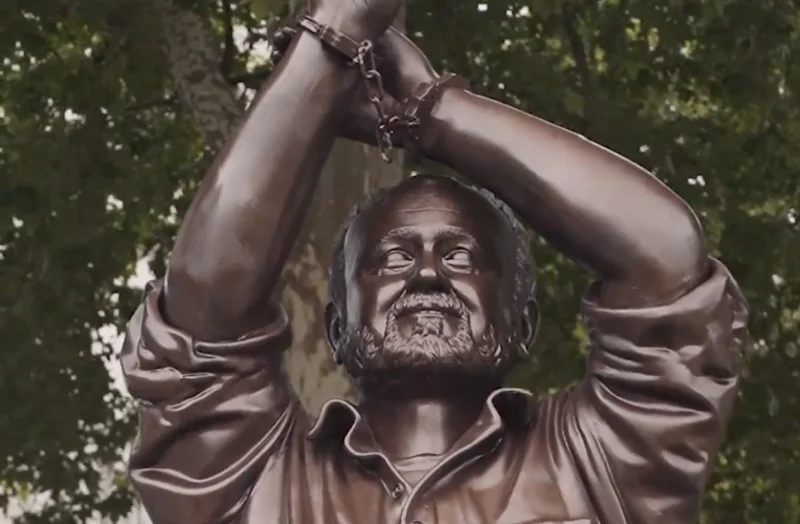
A campaign to free Marwan Barghouti is moving through Western celebrity circles, international NGOs and European cities, with posters appearing in Marseille and Benedict Cumberbatch signing open letters. Nobel laureates have added their names too, giving the push for the Palestinian figure a new burst of visibility.
That visibility is the point. Supporters cast Barghouti as a unifying moderate and even a man of peace, and the campaign has reached for the symbolism of Nelson Mandela, beginning at Robben Island and drawing backing from figures such as Desmond Tutu and Jimmy Carter. But the record the campaign has to contend with is harsher: Barghouti was convicted of five murders and sentenced to five life terms plus forty years.
His case has become a cause célèbre precisely because it sits at the intersection of politics, memory and celebrity. During the Second Intifada, he was celebrated for planning and directing attacks that resulted in the deaths of Israeli civilians, and he was convicted of planning terrorist attacks at a restaurant, a gas station and a hiking trail. That history is why the label of political prisoner lands so differently depending on which side of the conflict is speaking.
The gap between the campaign’s imagery and Barghouti’s record is widening, not narrowing. He has consistently endorsed armed resistance from prison and has refused to renounce violence, facts that sit uneasily beside the polished language of peace now attached to his name. The same campaign that fills European streets with posters and gathers prominent signatures is asking readers to forget the violence that put him behind bars in the first place.
For now, there is no sign of a legal or diplomatic move that would change his status. What the campaign has achieved is something else: it has turned Barghouti into a test of whether public sympathy can outrun the facts of conviction, sentence and the bloodshed that led to both.