


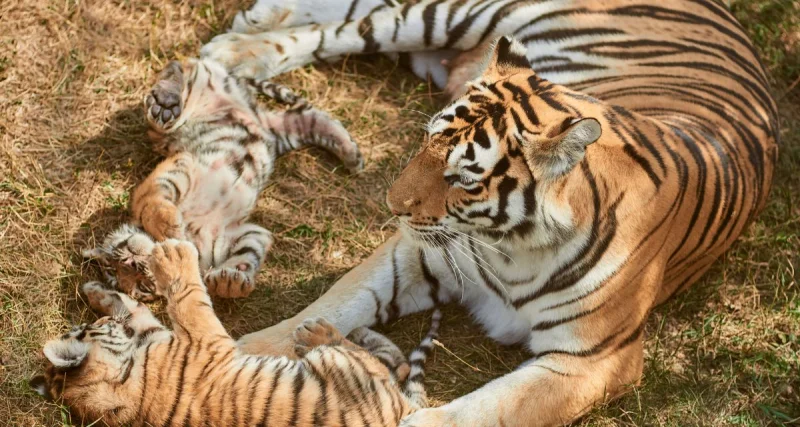
Wildlife researchers filming Earth’s two-part Tiger Island captured something that does not fit the way tigers are usually described: two mothers in Nepal appearing to babysit each other’s cubs. Drone footage first showed Goma resting with her two cubs, then three more cubs joined them, those cubs belonging to another tiger, Jugini.
That is why the footage from tiger island is drawing attention now. Tigers are generally thought of as fiercely solitary animals that avoid one another unless they have to, and researchers rarely get this kind of long look at them in the wild. Dan O’Neill reacted with disbelief when he saw the behavior, saying, “They don’t share cubs, they don’t share parenting duties.”
The team believes Goma and Jugini may have been responding to the threat posed by males, which would help explain why two mothers ended up sharing cub-rearing duties. But the reason remains unproven, and that uncertainty is part of what makes the images so striking. In a species so often associated with isolation, the footage suggests that survival can sometimes push even the most solitary animals into cooperation.
Researchers have seen a version of that before. In 2006, a Royal Bengal Tiger named T-25 in India’s Ranthambore National Park took in two orphaned cubs after their mother died, protected them and raised them until they were old enough to fend for themselves. Max Hug Williams said of the new footage, “This is NOT what it says in the textbooks,” and O’Neill added that people do not expect there to be much left to learn about the planet’s most iconic predator, “but there is.” The next question is not whether the behavior happened on camera; it did. It is whether anyone can explain why Goma and Jugini chose it.
