


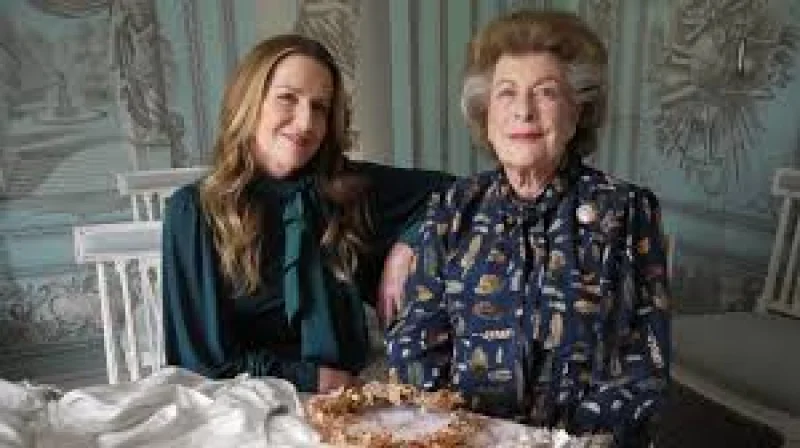
Lady Pamela Hicks, one of the last living links to Queen Elizabeth II’s inner royal circle, has died aged 97. The former lady-in-waiting, bridesmaid and lifelong witness to the Windsor world was the great-great granddaughter of Queen Victoria and the oldest surviving descendant in that line.
Her death removes a figure who knew the modern monarchy from the inside long before it became global spectacle. Hicks was a childhood playmate of Princess Elizabeth and Princess Margaret, and later served as lady-in-waiting to the young Queen Elizabeth II, placing her close to the family at the moment Elizabeth’s private life became public duty.
That closeness ran through the details of her own life. Hicks was the younger daughter of Louis Mountbatten and Edwina Mountbatten, born five weeks prematurely in the Ritz hotel in Barcelona while her mother was on holiday in Spain. A royal guard was posted outside the building, and she was briefly considered for the name Ritzy. Her godparents included Alfonso XIII of Spain and the Duke of Kent, a sign of how deeply she was tied to Europe’s dynastic old world from the beginning.
She moved through that world for decades. At eight, she and her elder sister Patricia were left for four months in a hotel in Budapest. When war broke out in 1939, they were evacuated to New York and lived with Cornelia Vanderbilt before Hicks returned to Britain within a year because she was homesick. In 1946, she went with her parents to Delhi after her father became the last viceroy of India, living in the viceregal lodge with its 340 rooms, a mile and a half of corridors and grounds of 190 acres. The following year she was a bridesmaid when Princess Elizabeth married Philip, and she later joined an aborted royal trip to Kenya as a lady-in-waiting after King George VI died suddenly in Britain.
For all that privilege, Hicks also spoke bluntly about the emotional loneliness behind her upbringing. In 2012, she said she never liked her mother and described Edwina Mountbatten as someone who needed constant flattery and could never have a close conversation. That private judgment sat uneasily beside the public image of a woman who moved among kings, queens and viceroys, and it made her memoirs feel less like palace nostalgia than an account of how lonely that world could be. Hicks also met Mahatma Gandhi as a teenager at a prayer meeting, another reminder that her life crossed not only royal history but imperial collapse.
Her death leaves a gap the records do not yet fill: no cause has been given. What is clear is that one of the most unusually placed witnesses to Queen Elizabeth II’s early life, and to the end of the Mountbatten age, is gone.
