


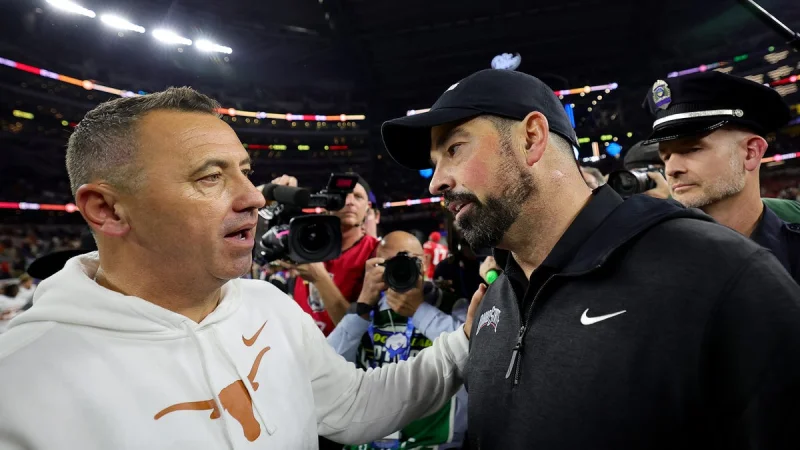
Steve Sarkisian did not just compliment Curt Cignetti on Thursday. He tied Indiana’s fast rise to a broader change in how college football programs are thinking about schedules, saying the Hoosiers’ turnaround has helped push other teams to value an extra win over a tougher nonconference slate.
Speaking on the Always College Football Podcast with ’s Greg McElroy on June 4, Sarkisian said Cignetti has done an amazing job over the last two years at Indiana, the program that had long carried the label of the losingest in college football history. The Texas coach pointed to the mix Cignetti used — sixth-year seniors, transfers, veteran players and a sharper practice routine — and said Indiana also adjusted its schedule and had a fresh team that played a lot of players early in the year.
The numbers behind that rise help explain why the discussion has widened. Indiana opened with a 3-0 start against FIU, Western Illinois and Charlotte and won those games by an average margin of 45.3 points. It finished 11-1, earned an at-large bid to the 2024 College Football Playoff and then lost 27-17 at Notre Dame, a game Cignetti later described as an ass kicked. The season did not end there in the larger football conversation: Indiana also beat Old Dominion, Indiana State and Western Illinois by an average margin of 44.3 points, opened Big Ten play with a 63-10 rout of No. 8 Illinois and, in the version of the program now being used to sell the sport, went 16-0 and won its first national championship.
That success has put Cignetti in the middle of a scheduling argument that has hovered over college football for months. One side says teams should keep testing themselves with difficult nonconference games because strength of schedule still matters. The other says records and playoff access matter more, and Sarkisian made clear he thinks more programs are moving toward that second view. “We can’t, everybody, want to adopt the ‘Indiana Way’ but then, not adopt all of the ‘Indiana Way,’” he said, adding that teams are starting to change their nonconference schedules because they see “the value of another win” over the value of strength of schedule. The Big Ten has defended Indiana’s approach, while the SEC’s scheduling philosophy has been part of the same debate.
That is why Cignetti’s rise keeps surfacing beyond Bloomington. He has become both a model and a warning: if Indiana’s formula is now being copied, the next argument is not whether it worked for one team, but whether everyone can keep selling the same path and still claim it means the same thing.
