


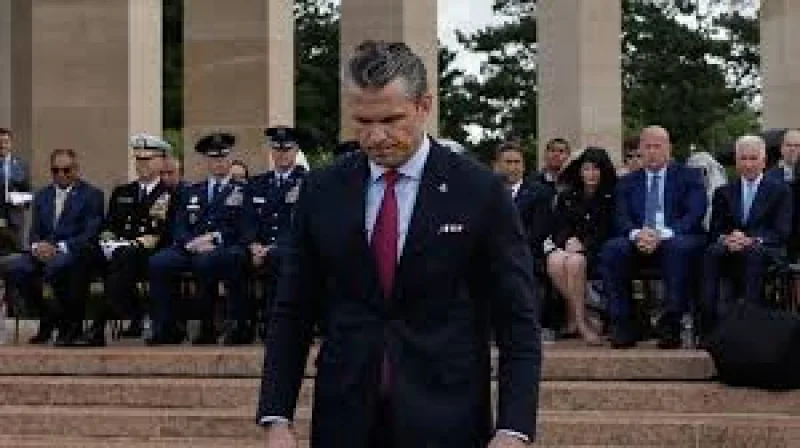
Pete Hegseth used a D-Day anniversary speech in Normandy to attack European migration policy, telling a solemn memorial for the Allied liberation of Nazi-occupied Europe that the continent was being hit by an invasion. Speaking 82 years after troops landed on five separate beaches in northern France, he said European capitals had grown too comfortable with hard-won freedom and asked when they would act.
The remarks landed because they came at a ceremony meant to honor the men who fought and died at D-Day, not to reopen Europe’s border debate. Hegseth said “freedom is not free” and warned that the freedom restored in 1944 would be only temporary unless this generation of leaders and war fighters maintained it, while naming beaches in Spain, Italy, Greece and Bulgaria as places he said were being stormed by dangerous ideologies.

Migration has become one of the most combustible political issues in Europe, where parties backing hardline immigration policies have surged in the polls. The Trump administration has also made enforcement central to its own domestic agenda and has asked Congress for billions more in funding for enforcement agencies, putting Hegseth’s remarks in step with a wider White House line that sees migration less as a policy problem than a civilizational one.
The friction is hard to miss. A commemoration built around the Allied effort to defeat Nazi-occupied Europe was turned into a warning about migrants arriving by boat, with Hegseth asking, “Boats and men arrive. When will European capitals do something about that invasion?” The speech echoed a similar message from Washington: last year Donald Trump told the UN that European countries were going to hell because of uncontrolled migration, and on Friday Vice-President JD Vance blamed the death of Henry Nowak, the 18-year-old fatally stabbed last year in Southampton, on the mass invasion of migrants, prompting criticism from Downing Street after officials said he was interfering in Britain’s democracy.
What happens next is the part Hegseth did not answer. European leaders have already heard the message from Washington, but the sources do not show any immediate policy response. The more immediate question is whether the Normandy speech becomes a one-off provocation at a war memorial or the latest sign that migration, not memory, is setting the terms of the transatlantic conversation.
