


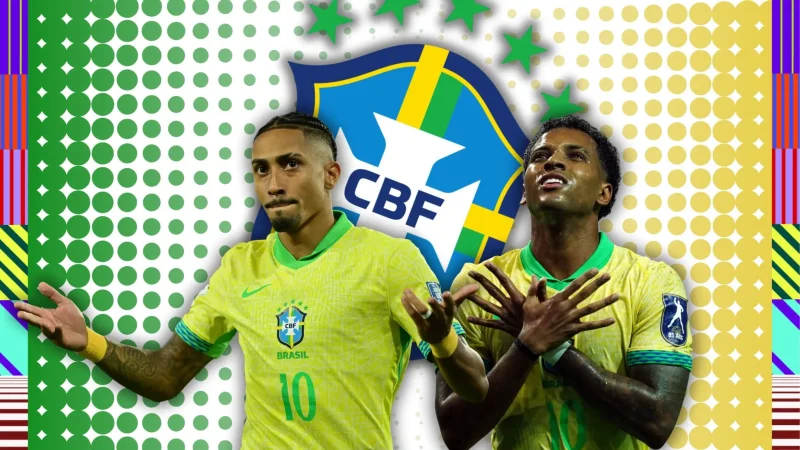
Carlo Ancelotti used the hour after Brazil's 31 May win over Panama to redraw one part of his attack. He said Raphinha is not a center forward, and that his best use is closer to the defensive line, where he can run into space behind it.
The timing matters because Brazil are already moving toward their next friendly against Egypt on Saturday, and Raphinha is suddenly one of the key decisions in the team. He played 45 minutes as a false nine against Panama and finished without much brightness, a modest outing that gave Ancelotti a live example for what comes next.
Ancelotti did not frame the winger as a problem player. He framed him as a specialist. In the coach's view, Raphinha is the best in the world at attacking the space behind the last defensive line, but not someone to pin against center backs and ask to receive with his back to goal. That distinction matters for Brazil because the staff is trying to define roles around a forward group that has already changed shape.
The clearest contrast comes from club football. Raphinha can play inside and as a number 10 at Barcelona, and he has the production to support any argument for a central role after scoring 55 goals in his last two seasons in Catalonia. But Ancelotti's reading is narrower and more specific: let him start closer to the line, then let his movement do the damage. That is a very different use from standing him up as a reference point in the middle.
Brazil had its best moment under Ancelotti between October and November of last year with a front line built around Rodrygo, Estêvão, Matheus Cunha and Vinícius Júnior. That version of the team is no longer available in full. Rodrygo is out of the World Cup after a serious knee injury suffered in March last year, and Estêvão is also sidelined by injury. The losses have pushed Brazil to revisit pieces that once looked settled.
That is where Raphinha enters the picture again, and why the coach's wording carries weight beyond one friendly. He is being asked to help fill space left by absences, yet his profile is not the same as Rodrygo's, and Ancelotti made that difference plain. He said he will not tell Raphinha where to stand when Brazil have the ball, only where to begin the action so his creativity can find the right position. The message is freedom, but within a fixed tactical idea.
For now, the immediate test is Egypt on Saturday. If Ancelotti keeps Raphinha central, it will be because he believes the run behind the defense matters more than the label beside his name. If he moves him wide again, the Panama game will read as a trial rather than a hint. Either way, Brazil's attacking map is being drawn in real time, and Raphinha is one of the players most directly affected.
