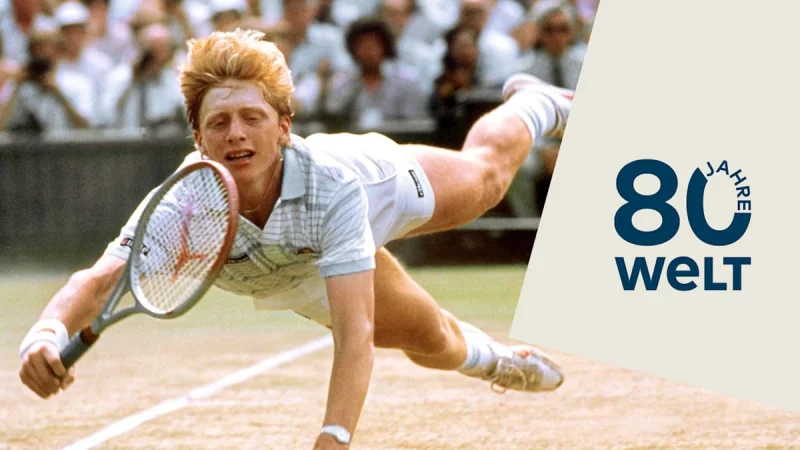
Boris Becker changed Wimbledon on 7 July 1985. At 17 years old, he beat the sport's most polished setting on its own Centre Court and became the youngest men's champion in the tournament's history.
That victory is still searched now because it was more than a title. Becker was not just a teenager with a big game; he became a superstar overnight, and German readers saw him on the front page the next day. The paper's decision to lead with the triumph underlined how far the moment reached beyond tennis.
Richard von Weizsäcker also sent congratulations, praising Becker's sporting performance and the way he had carried himself under pressure. The message matched the mood around the win: not just surprise, but a sense that something larger had happened for German sport.
Wimbledon carried a very different image then, tied to the English upper class calendar, ritual and restraint. Becker's style cut against that. He played with power and force, a brachial approach that looked almost out of place in a tournament built on polish and tradition. That contrast helped make the win unforgettable. Tennis had rarely produced so many charismatic figures as it did in that era, but Becker stood out because he brought noise, speed and force to a stage that usually rewarded calm.
Germany took him in as a new hero at a time when football offered little excitement and stadiums were often nearly empty. The appeal was obvious: here was a 17-year-old who won alone, on a court, under pressure, and did it with a style that seemed to announce a different kind of confidence. Becker's breakthrough did not just fill newspaper pages. It changed what German fans believed a tennis champion could look like, and it set up a career that began with one impossible afternoon in London.