


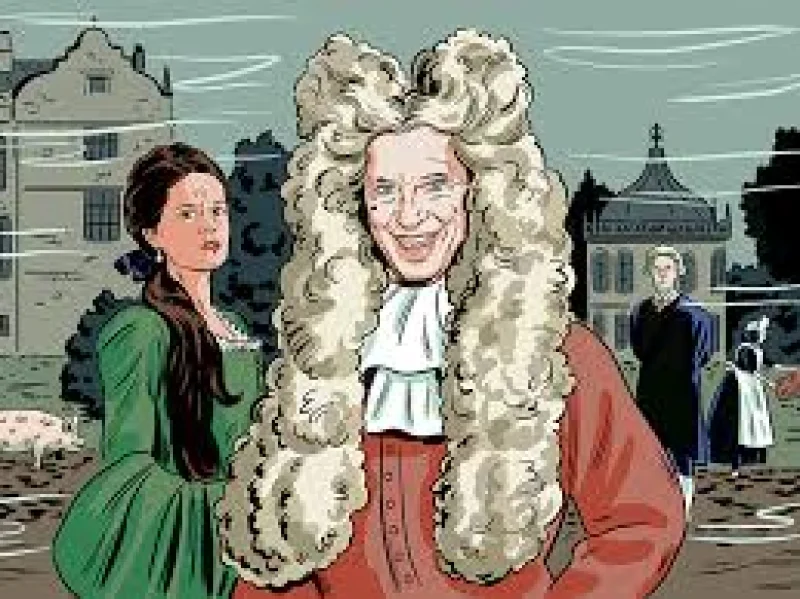
Sir Chauncey Savage and Lady Savage have 10 days to turn a crumbling, plague-time household into somewhere fit for the Duke and Duchess of Devonshire. In Savage House, that deadline is the fuse, and every lie the couple has told about themselves starts burning at once.
Written and directed by Peter Glanz, the film is set in 1715 and built as a lockdown project inside one house, with interiors from Syon House and West Wycombe and exteriors from Montacute and Hatfield. It is also a reunion of sorts for a kind of English social comedy stripped of comfort: Richard E Grant plays Chauncey, Claire Foy plays Lady Savage, and both spend much of the film trying to sell a life they can barely afford to live.
The urgency comes from the invitation itself. The Duke and Duchess of Devonshire invite themselves to stay, and Chauncey, a chancer and swindler who has married far above his rank, suddenly finds a reason to act like a man of consequence. He and Lady Savage, from a fallen Yorkshire noble line, scramble to disguise the fact that they are penniless because of his drinking, gambling and general profligacy. They sell her jewellery, buy clothes and paintings, and recruit footmen from the peasantry, all in the hope that genuine toffs might restore their fortunes.
But the house is already split from within. The Savages live with just two servants, Reginald and Dorothy, and neither is remotely loyal; he is Chauncey’s valet and criminal accomplice, she is Lady Savage’s sneaky maid, and the pair are in league to supplant their master and mistress. Both upstairs and downstairs are rotting at the same time, which is the joke and the point. Even the language is sharpened for ridicule, with the film cut into mannered chapters and narrated in a derisive voiceover modelled on Barry Lyndon.
Then the pretence collapses faster than the dining room can be reset. The servants revolt. Chauncey is left crippled by gout and later gets gangrene after a foolish duel. The new footmen turn out to be larcenous Jacobites who bring the pox into the house. By the time that happens, the Savages’ dream of passing themselves off as respectable hosts is finished, not merely threatened. Their scandal is not that they are vulgar; it is that they are desperate, and the desperation has made them ridiculous.
That is why Savage House fits so neatly beside the country-house satires it echoes, from Hogarth’s The Rake’s Progress to the polished class games of Downton Abbey and Bridgerton. It also gives Grant another of the scabrous aristocratic grotesques that have become one of his signatures, after roles in Withnail and I, Downton and Saltburn. The film, by the sound of it, is less interested in whether the Savages can survive the visit than in watching what is exposed while they try. The answer is already clear: once the Duke and Duchess arrive, there is no version of this family that can still pretend to be respectable.
