


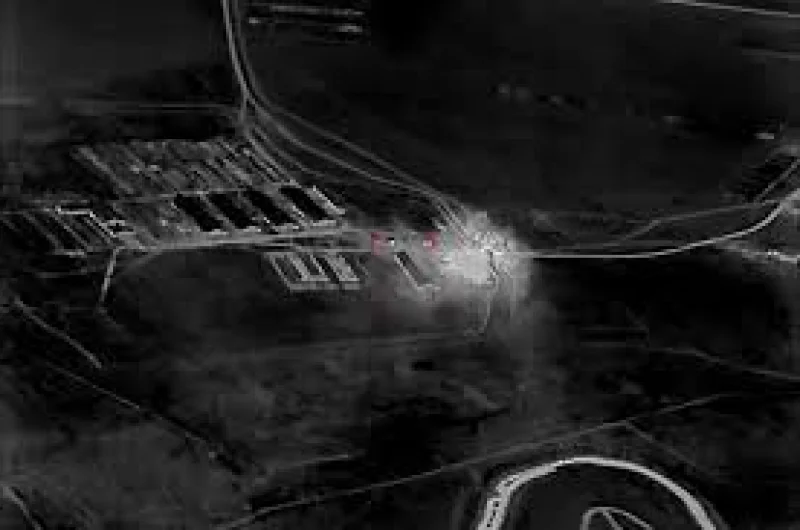
Ukrainian soldiers have begun using commercial satellite imagery to guide attack drones against Russian targets in near real time, a shift that is speeding the hunt for targets and changing how drone warfare is being fought on parts of the front.
In one strike about 10 kilometers from the front line in southeast Ukraine, a small unit identified a Russian meeting spot after watching it from orbit for three days, then hit the building and vehicles with an attack drone. The system, which delivers high-definition satellite images directly to soldiers’ phones, tablets and laptops, has cut by as much as 90% the time it takes to locate and strike Russian assets, according to Ukrainian service members involved in the effort.
The use of unclassified, commercial satellite imagery directly by soldiers appears to be the first known case of its kind in Ukraine’s war, now well into its fifth year. The technology comes from a trans-Atlantic collaboration involving Vantor, Bravo1Alpha, Persistent Systems and Burevii, and it has been tested over the past six months in small-team missions designed to move faster than the old reconnaissance cycle.
During a spring operation called Starfall II, one Ukrainian unit spent 2½ weeks destroying billions of dollars in Russian assets, including an ammunition depot in occupied Ukraine. In another case, soldiers matched a current satellite image with older photographs from before the invasion and noticed changes to structures that had once stored grain. Those buildings were later treated as a target.
The approach also reduces a dependence on surveillance drones, which soldiers said can be costly and are easier for Russian forces to jam or shoot down. That matters because the satellite feed is helping teams move from spotting to striking without waiting for another aircraft to confirm what they already believe they see. One service member described the effort as, “It was good work,” while another said, “We made problems for our enemy.”
Ukraine has been improving midrange strikes on Russian logistics hubs, warehouses and air defenses at the same time, and the satellite program fits that broader push for quicker, more precise attacks. The satellites had previously been used for tasks such as monitoring illegal fishing and updating Google Maps, a reminder of how a commercial tool built for civilian use is now being folded into battlefield decision-making. What remains unclear is how widely the system is being deployed across the Ukrainian military, and how many strikes it has directly enabled.
