


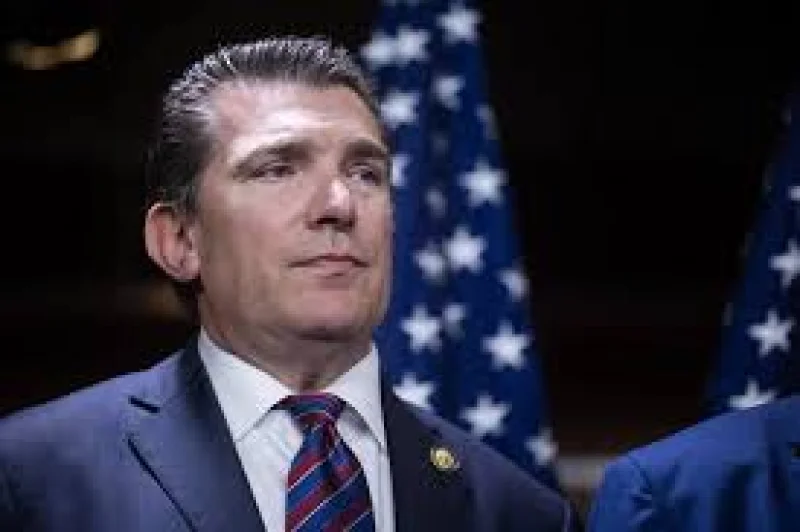
Representative Lori Trahan and Republican Representative Jay Obernolte unveiled a bipartisan draft artificial intelligence bill on Thursday that would put Washington in charge of core AI safeguards and block states from writing tougher rules for three years. The proposal would create a federal oversight agency, require transparency and audit reporting from developers, and collect data on how AI affects workers.
The timing is what has turned Trahan into a target. A group that backs AI regulation launched ads in Massachusetts this week accusing her of siding with “AI oligarchs” and putting children at risk, while Tech Oversight Project ran a push poll in her district that described the bill as “weaken(ing) potentially life-saving AI guardrails.” Trahan has no opponent in the Democratic primary, which has made the backlash especially visible because the fight is playing out before voters even have a race to sort through.
The bill came after weeks of negotiations between Trahan and Obernolte, who has been leading House Republican work on AI. It would require safety standards for AI developers and formalize a federal oversight structure at a moment when lawmakers are under pressure to decide how quickly to regulate a fast-moving technology. Trahan, a member of House Democratic leadership and the Progressive Caucus, said the rapid pace of AI development and its potential for dangerous use is too urgent for Congress to ignore.
That urgency is also the source of the pushback. Tech safety groups and some state political leaders tried to convince Trahan to abandon the talks last month, and the Democratic AI caucus said Thursday that it does not support her effort. Critics say the draft’s three-year state-preemption language would stop states from passing stronger protections, including child safety laws, even though Trahan says the bill would not hamper state legislation in the way critics describe. The draft is being compared with leading state AI laws in California, New York and Illinois, which is exactly why opponents see the federal cap as a rollback rather than a floor.
For now, the bill has opened a new fault line inside the party around how to govern AI: whether a national framework can move first without flattening the stronger state rules that have already started to emerge. What remains unanswered is whether Trahan can keep enough Democratic support to move the proposal forward in Congress, or whether the backlash around the preemption clause will stop it before it gets there.
