



More than 100 days after Nancy Guthrie was last seen in Pima County, Arizona, investigators are talking about a fresh push in the case: new technological tools that could be brought in as the search for the missing 84-year-old continues. At a CrimeCon panel in Las Vegas, one reporter said he had heard from a federal source that the case is now being discussed in those terms, a sign the investigation has moved beyond the early scramble and into a narrower, more urgent phase.
The reason people are still following the case so closely is simple: Savannah Guthrie has not waited for law enforcement alone. Donna Rotunno said she has spent $500,000 of her own money hiring investigators, a figure that shows how far the family has gone to keep pressure on the case. Rotunno said that spending told her Savannah Guthrie was not satisfied and did not have much faith in where police have taken the investigation so far.
That skepticism sits on top of a basic problem for detectives. Paul Mauro said that if a scene is not secured quickly and evidence is not gathered fast, it becomes much harder to build a case later that can stand up in court. He also said the DNA should have gone straight to the FBI, a point that lands hard in a case still trying to recover momentum after the first days were lost.
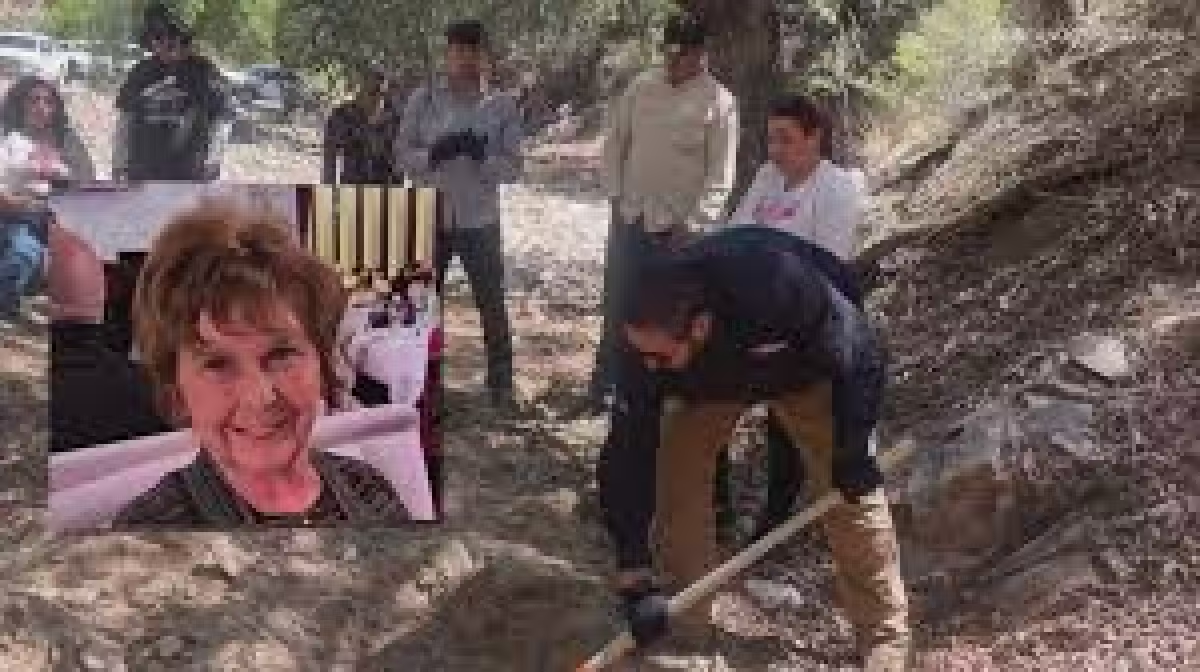
One piece of evidence shows how messy that early handling became. The Pima County Sheriff’s Office wanted a hair found at Guthrie’s home to be tested at a lab in Florida, even though the FBI sent a plane to move it to Quantico, Virginia. Federal agents did not get access to the hair evidence for 11 weeks. That kind of delay may not just slow a case; it can shape what kind of case is possible at all.
The panel also raised doubt about another part of the investigation that has circulated publicly: the ransom notes. The panelists said it is unlikely they were written by the kidnapper, and Rotunno said the case was initially treated as a missing person investigation, which may have meant investigators walked into it with the wrong lens. If that first read was wrong, the evidence trail may have been too thin from the start.
Josh Ritter added another clue about how investigators are thinking about the noise around the case, saying the last place you go to is TMZ. The remark underscored how much of the public narrative has been driven by rumor and chatter rather than firm evidence. For now, the real question is not whether the case is being watched. It is whether these new tools, if they are actually deployed, can still rescue a prosecution after more than three months of delay and missed ground.
