


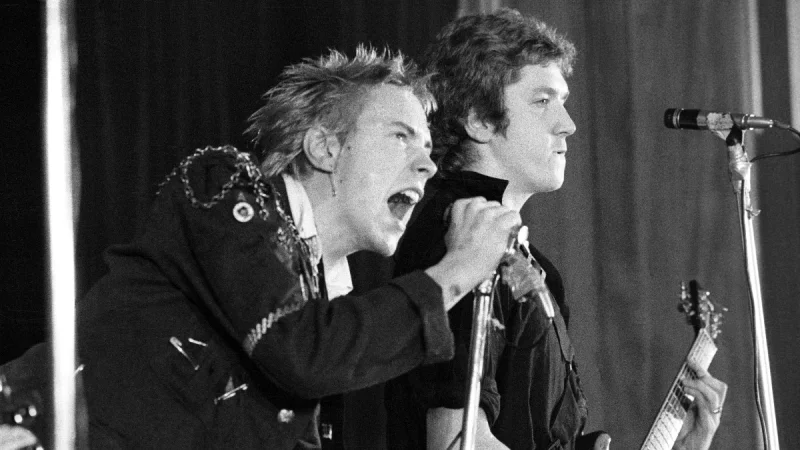
Fifty years ago this week, the Sex Pistols played their first Manchester gig at the Lesser Free Trade Hall, and only a few dozen people were there to see it. Among them was Tony Wilson, who would later present the band’s first TV appearance on Granada TV’s So It Goes.
That date now carries the weight of legend because the small room linked up a set of names that would define what came next. Future members of Joy Division, the Smiths and the Fall were in the audience, and in the months that followed the Clash, the Damned and Buzzcocks made their live debuts while Sniffin’ Glue arrived and the Ramones played their first British gig. By the end of September 1976, the Sex Pistols had also turned up on television, and London’s 100 Club had already hosted its now-legendary punk festival.
It is easy to forget how strange the pre punk music scene 1976 looked before all that. In January, the NME put a photo of a room damaged by an IRA bomb on its cover and asked, “Is rock’n’roll ready for 1976 … Is 1976 ready for rock’n’roll?” Mick Farren wrote that audiences were “prepared to tolerate just about anything,” while also saying rock had “lost its guts” and was drifting “on an unalterable course to a neo-Las Vegas.” In June, he returned to the same complaint in a piece titled The Titanic Sails at Dawn.
That gloom helps explain why the Manchester show mattered, but it also feeds the myth around it. The gig is now talked about as a hinge point in British music, yet the room held only a few dozen people, not a mass audience waiting for a revolution. The point was not that everyone saw it happen. The point was that the right people were in the same room, and they carried it forward.
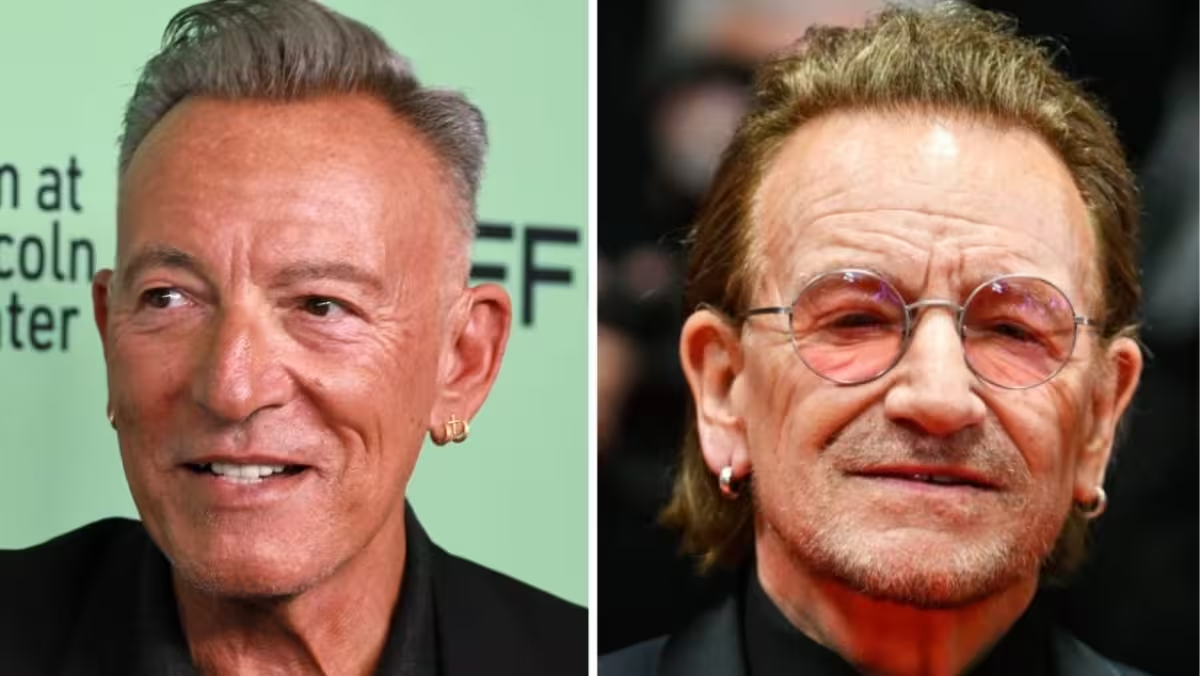
That wider world was still moving fast enough to be missed while it was happening. Bruce Springsteen’s label was trying to sell him in Britain with the line “Finally, London is ready for Bruce Springsteen,” and Nils Lofgren was being tipped as one of the biggest stars in the world. Those were the assumptions of the old order. What followed in the second half of 1976 was a scene that did not ask for permission, and by the end of September the story had already moved from one small Manchester hall to television, fanzines and the punk festival at the 100 Club.
