


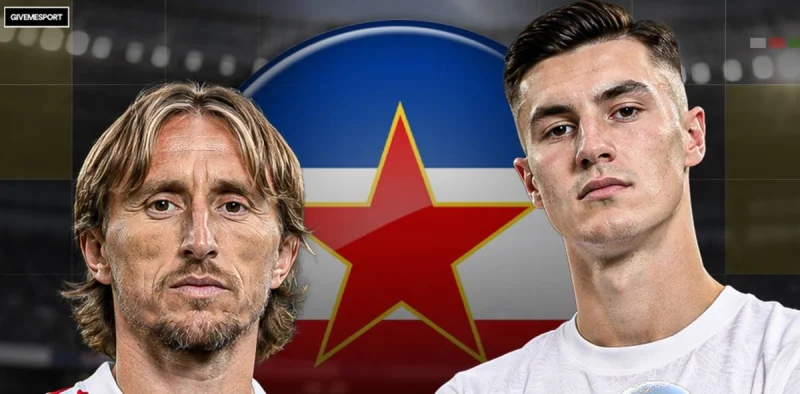
A modern-day Yugoslavia XI has been put forward as a serious force for the 2026 World Cup, with Jan Oblak cast as the likely No. 1. The projection leans on players from Croatia, Serbia, Slovenia, North Macedonia, Montenegro and Bosnia and Herzegovina, turning a dissolved state into a hypothetical contender again.
The timing matters because the World Cup is still ahead, and that kind of fantasy lineup only works when the names on it are in their prime now. Oblak was singled out as one of the best goalkeepers in the world and the safest choice in goal, while Vanja Milinkovic-Savic was presented as a strong challenger and Stole Dimitrievski, who plays for Valencia, as the third option.
The appeal of the idea is easy to see when the old Yugoslavia record is laid alongside the talent pool now. In 1990, Yugoslavia reached the quarter-finals in Italy before losing on penalties to reigning champions Argentina. Eight years later, the Federal Republic of Yugoslavia went to France with Slobodan Santrac's squad, which included Savo Milosevic, Predrag Mijatovic, Sinisa Mihajlovic and Dejan Stankovic, finished level on points with Germany in Group F, beat the United States and then lost to the Netherlands in the Round of 16.
But the modern version is only possible on paper, and that is where the idea runs into history. Croatia and Slovenia had already declared independence from Yugoslavia in 1991, long before the 1998 tournament, which means any present-day Yugoslavia side would be stitched together from countries that now compete separately. Croatia still finished third at that World Cup, with Davor Suker winning the Golden Boot, a reminder that the region's football strength splintered rather than disappeared.
That is why the projected XI reads less like nostalgia and more like a test of depth across a broken map. Josko Gvardiol, a regular starter at Manchester City, Josip Stanisic, who has been capped 29 times by Croatia, and defenders Strahinja Pavlovic and Nikola Milenkovic were all folded into the same imagined team. GiveMeSport did not name a real squad for the 2026 tournament, and no official Yugoslavia entry exists, but the exercise underlines how much top-level talent the former republics could still assemble if history allowed it.
