


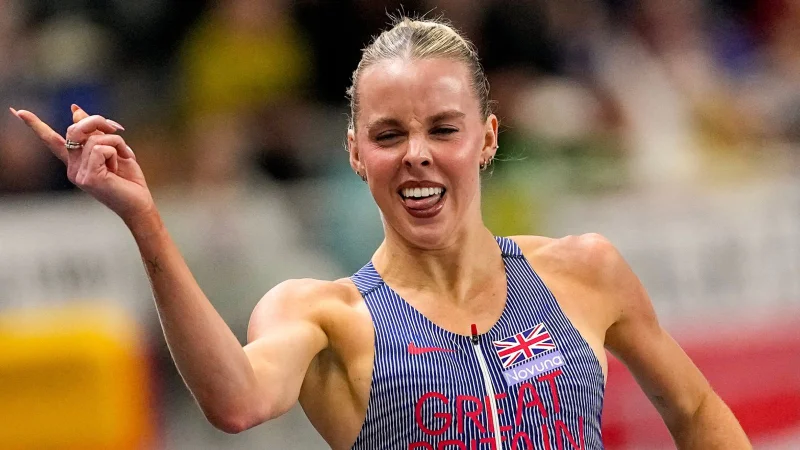
Keely Hodgkinson has sharpened her bid for the women’s 800m world record with a training session that sent a clear signal before her outdoor season begins in Rome on Thursday, June 4. The Great Britain Olympic gold medallist averaged 49.1 seconds across 400m training runs at Manchester Regional Arena, a marked improvement on her previous 50.5-second average.
The session mattered because Hodgkinson is not chasing a normal benchmark. She is trying to break a record that has stood since 1983, when Czechoslovakia’s Jarmila Kratochvilova ran 1:53:28. A 400m average in the 49-second range suggests the speed is there, and that is why the stopwatch drew so much attention before the first race of her outdoor campaign.
Geraint Hughes of Sky Sports News was invited to watch the workout, a sign that the build-up around Hodgkinson is already significant before she has even opened her season. In Manchester, she worked through a set of 400m training runs under the eye of coaches Jenny Meadows and Trevor Painter, who have helped shape the M11 group’s preparations around the fastest part of the race.
Meadows said Hodgkinson still finds ways to surprise them, and the numbers backed that up. She said two split 400m laps produced an average of 49.1 seconds, which is exactly the kind of pace that makes the record chase feel real rather than theoretical. Painter stood nearby with his stopwatch and notepad after the session, the sort of quiet post-run ritual that usually means the details matter as much as the headline number.
But the gap between training and racing remains the part that will decide everything. Hodgkinson can move through a blistering set of splits on an empty track; what she now has to prove is that she can carry that speed into a controlled 800m performance against the clock and against pressure, because breaking 1:53:28 requires more than one fast session. It requires a race that is measured, fearless and almost perfectly paced.
She has made no secret of the ambition. Hodgkinson has spoken about wanting world domination, and the next chance to measure that against reality comes in Rome. If the Manchester work was the warning shot, Thursday’s season opener will show whether the pace in training can turn into the kind of race that puts the oldest major record in athletics within reach.
