


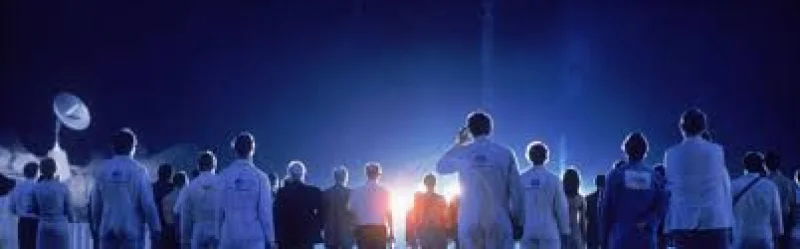
Steven Spielberg is back in the UFO conversation, and he is doing it with a new film that reaches straight toward the same government-secrecy anxieties that made Close Encounters of the Third Kind a landmark in 1977. Disclosure Day has now been tied in trailers to extraterrestrials and to Spielberg’s older classic, even as the press notes make clear it is not a sequel.
That matters now because the movie lands in a year when UFO talk has once again moved from late-night speculation into the mainstream, helped along by fresh frustration over what the Pentagon has chosen to release about reported UAP sightings. The contemporary label for the subject, Unidentified Anomalous Phenomena, may sound more measured than the old flying-saucer language, but the public suspicion behind it is the same: someone, somewhere, may be holding back the full story.
Spielberg himself has been explicit about the line connecting the two films. In one trailer, he linked Disclosure Day to the world of Close Encounters, and Emily Blunt described it as “a third act” alongside Close Encounters and ET The Extra-Terrestrial. That phrasing was enough to send online speculation racing toward a sequel theory, even though the release notes shut that down. For viewers who remember Richard Dreyfuss as Roy Neary, the ordinary family man who sees a UFO and ends up building mashed potatoes into the shape of a giant rock at the dinner table, the callback is hard to miss. Roy’s obsession leads to the site where the UFO will land, the glowing mothership becomes one of the movie’s key images, and the five music notes scientists use to communicate with extraterrestrials give the story its memorable shape.
Close Encounters also built its suspense around concealment. Roy and Jillian join other witnesses at a community meeting, only for a US Air Force officer to tell them what they saw was definitely not from space. On television, the evening news says a train derailment has caused a chemical leak and that a 300-mile evacuation is needed near Devil’s Tower in Wyoming. In the film, that report is a cover story, and officials are already moving a huge military operation toward the site to prepare it as a landing place for the spaceship. That old fear, rooted in the supposed 1947 Roswell crash and intensified over decades of UFO lore, is exactly what gives Disclosure Day its pull now.
Spielberg has never hidden his own fascination with the idea that we are not alone. He once said he was even more inclined now than when he made Close Encounters to believe that “we’re not the only intelligent civilisation in the Universe.” Disclosure Day appears designed to revive that wonder without pretending the questions have gone away. What remains unclear is how far the new film will go beyond the trailer’s tease and the press notes’ warning to address the secrecy itself, rather than simply trading on the shadow it casts.
