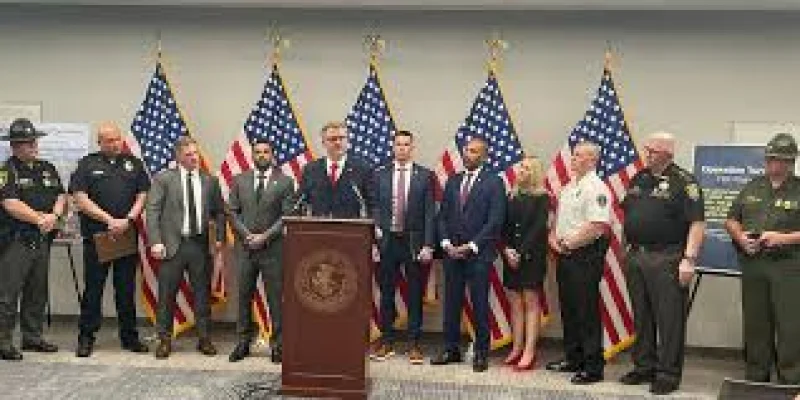
Thirteen people were arrested in West Virginia and Maryland on Tuesday, June 2, 2026, after federal authorities dismantled two multi-state drug trafficking organizations they say moved cocaine and cocaine base across county lines for two years. The bust reached deep into Berkeley and Jefferson counties and pulled in alleged leaders, couriers and organizers tied to one of the larger drug cases seen in the region this year.
The search terms that led people to the fbi story are plain enough: how many arrests, where they happened and what investigators say was taken down. The answer is 13 federal arrests in two states, with law enforcement seizing cash, cocaine and luxury items believed to have been bought with drug proceeds after searching multiple storage units and homes.
Two filed indictments say the first organization moved large amounts of cocaine base and cocaine through Berkeley and Jefferson counties over a two-year period. Prosecutors identified Rohan Broadie, Aneteneh Zewde Terfe and Marvin A. Taaff as leaders of that operation, which allegedly used several houses to store and distribute drugs. One defendant, Omari Obeng Stewart, reportedly moved between Maryland and West Virginia to supply, coordinate and sell cocaine and cocaine base across the area. That same case involved multiple defendants charged in a conspiracy tied to more than five kilograms of cocaine and 28 grams of cocaine base.
The second organization was allegedly led by Jorfory and Joroy Twyman, who investigators say worked together to distribute more than 500 grams of cocaine and amounts of cocaine base throughout Jefferson County. In both cases, agents said the groups operated across state lines and were built to keep drugs moving, cash flowing and evidence hidden in plain sight. The investigation also turned up guns in the hands of members of one group, which authorities said were used to protect trafficking activity and handle large sums of money.
That is where the numbers in this case stop lining up neatly. One law enforcement quote says the operation removed 14 alleged drug dealers from the streets, while the takedown was described elsewhere as producing 13 federal arrests. The discrepancy does not change the bigger point: two trafficking networks were broken up on the same day, after a coordinated effort that stretched across multiple states and relied on search warrants, surveillance and shared intelligence.
Richard Evanchec said tearing the operation out of communities across two states meant removing the poison and violence that had been tearing families apart, and added that the FBI and its local, state and federal partners would keep pushing to hold those involved accountable. Another law enforcement source said the teams gathered evidence, executed search warrants and did not take shortcuts. With the arrests now announced, the remaining question is procedural, not factual: how many defendants were ultimately charged in each indictment, and what comes next in court for the people accused of running the two networks.