


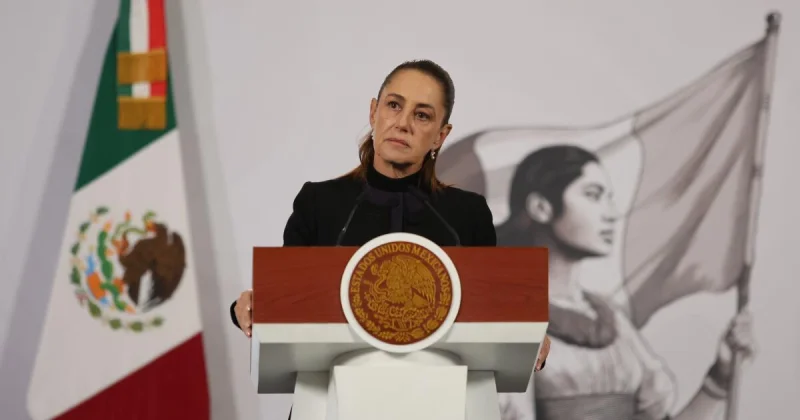
President of Mexico Claudia Sheinbaum accused the United States on Wednesday of meddling in Mexico’s internal affairs after reports that two governors from her party had their U.S. visas revoked amid criminal probes into possible links to organized crime.
The dispute landed in the open at Sheinbaum’s morning news conference, where she questioned why the visa cancellations were being disclosed and what was driving the investigations. She did not endorse the allegations, but made clear she saw the American response as more than routine law enforcement cooperation. “What is the intent behind revoking the visas, and, furthermore, making that information public?” she said. “What is the underlying motive?”
The governors named in the report were Alfonso Durazo of Sonora and Américo Villarreal Anaya of Tamaulipas. Sheinbaum said it was up to them to answer the allegations. Villarreal denied any connection to organized crime in a statement to The Times, saying that as a public servant he had always been transparent, responsible and followed the law. Durazo said on Wednesday that his visa had not been revoked and that he was not aware of any investigation into his actions.
Sheinbaum’s remarks come as Washington has increasingly moved against sitting Mexican officials in an unusually direct way. In April, the Justice Department revealed criminal charges against prominent members of Sheinbaum’s Morena party, including Gov. Rubén Rocha Moya of Sinaloa. Prosecutors accused Rocha Moya and nine other current and former officials of helping the Sinaloa cartel smuggle drugs into the U.S. in exchange for millions of dollars in bribes. Sheinbaum rejected a U.S. request to extradite Rocha Moya and said Mexican prosecutors would review the case.
That broader clash is what gives Wednesday’s exchange its weight. The United States is not only pursuing criminal probes, but also using visa actions against officials who remain in office, a step that Mexican leaders see as crossing a political line. Sheinbaum said Mexico does not accept interference when foreign actors try to dictate who is guilty or innocent, adding that when pressure is placed on Mexican institutions, “we are no longer talking about cooperation, we are talking about interference.”
For now, the next move is still unclear. Mexican prosecutors are expected to review the Rocha Moya case, but it remains unknown whether the U.S. investigations will lead to charges or whether Mexico will respond against the governors named in the latest report. For Sheinbaum, the immediate test is whether she can keep the dispute from turning into a larger fight over sovereignty while the investigations continue in the background.
