


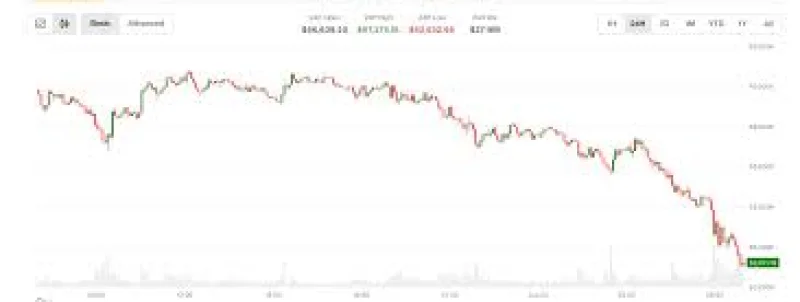
Bitcoin fell below $63,000 on Thursday for the first time since Feb. 24, extending a selloff that has left the world’s largest cryptocurrency down more than 14% this week and 21% over the past four weeks. The move dragged the market back to a level traders had not seen in more than a month and revived the question hanging over desks all day: why is crypto crashing now?
The pressure has not come from price alone. Investors pulled another $50 million from U.S.-listed spot ETFs on Wednesday, stretching the run of outflows to 13 consecutive trading days and underscoring how quickly sentiment around institutional demand has weakened. At the same time, the 30-day implied volatility index BVIV rose to 53.17, its highest reading since April 2, a sign that traders are paying more for protection as the swings get sharper.
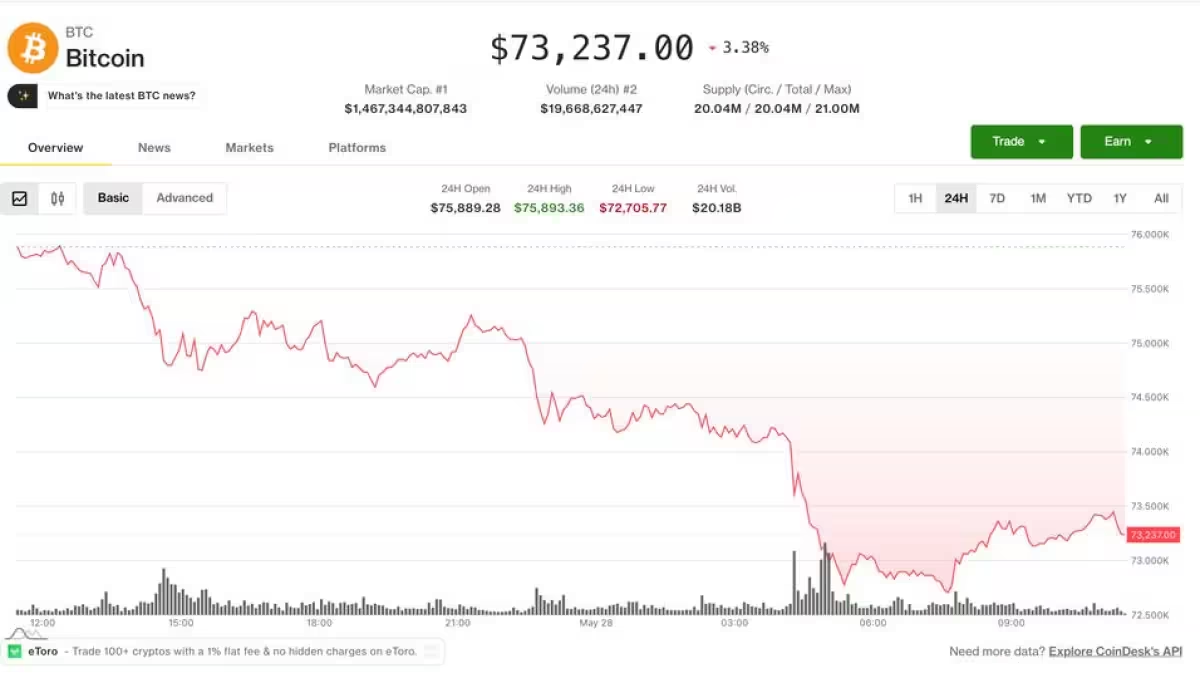
That backdrop matters because U.S.-listed spot ETFs have become a stand-in for the market’s institutional bid. When money keeps leaving those funds, it does more than shave a few dollars off Bitcoin; it signals that the buyers who helped propel the rally earlier this year are stepping back, at least for now. The result is a market that is now being driven less by fresh inflows and more by the fear that the next move could come from forced selling or a lack of support.
Paul Howard said a broad sell-off in crypto began with Strategy’s transfer, which triggered ETF outflows, and has since picked up pressure from speculative news about Mt. Gox liquidations. He said some market participants are now talking about $50,000 as a possible bottom this year. Howard added that the absence of catalysts and the move of liquidity into other tech sectors such as AI suggest more volatility could still be ahead.
Some traders are trying to find a floor closer to home. Material Indicators analysts said the low $60,000 region is the first major zone they are watching, with a local low around $59.9k and the 200-week moving average sitting in the same general area. But they also cautioned that the level does not guarantee support and only marks where the market will have to make a decision. For now, that leaves Bitcoin caught between a market searching for a bottom and another wave of selling that could send it lower before it stabilizes.
