


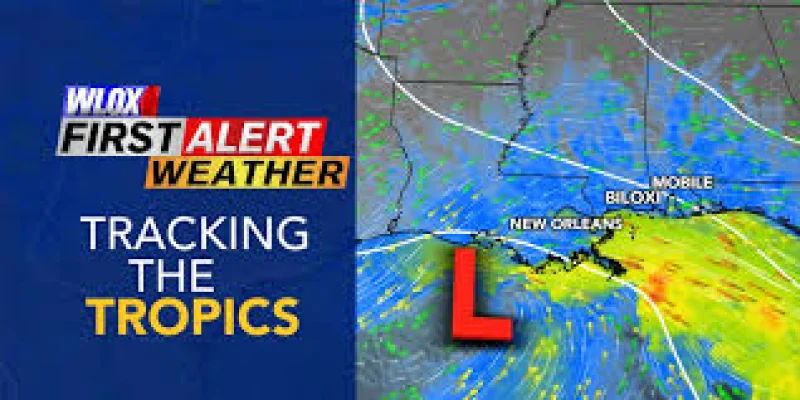
Strong offshore winds are expected to build along the Mississippi coast through Friday as an unsettled weather pattern over the Gulf gradually organizes into a weak area of low pressure and drifts north toward the central Gulf Coast. In Hancock, Harrison and Jackson counties, that could mean minor coastal flooding in low-lying areas, with isolated road closures possible during high tide cycles.
The concern is drawing attention now because the change is tied to this week’s forecast, not a distant storm track. Residents and travelers in coastal communities are watching tropical storm amanda chatter closely after forecasters said the pattern could produce higher than normal water levels along the coast before the weekend. The strongest effects are expected off the Mississippi and Southeast Louisiana coasts, where persistent onshore winds may push water farther inland than usual.
That setup gives the coast a narrow window of trouble. Strong offshore winds may lead to minor flooding through Friday, while scattered storms by the end of the week could also bring localized flash flooding. The risk is greatest in low-lying sections of Hancock, Harrison and Jackson counties, where even a modest rise in water can spill across roads, lots and drainage areas during repeated high tide cycles.
There is one part of the forecast that cuts against the flooding threat. A front is expected to bring drier air into South Mississippi Wednesday into Thursday, which should limit rain chances and offer a brief break before tropical moisture returns Friday into the weekend. That dry stretch may ease some immediate concerns inland, but it does not remove the coastal water problem already in motion.
The reason forecasters are not treating this as a tropical system is wind shear, which is expected to keep tropical development limited even as the low pressure area lifts north. That leaves the region with the practical hazards first: wind, higher water and a growing chance of storms later in the week. For coastal residents, the next question is not whether the pattern will shift, but how much water the high tides will push into the most exposed low-lying spots before conditions ease.
