


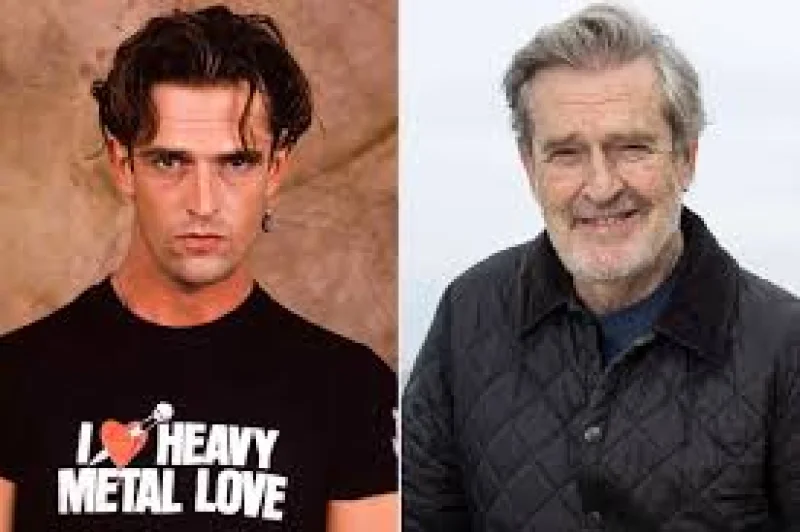
Rupert Everett has revisited the version of himself he says once powered his rise, calling his younger self “brash, disingenuous, lethal” and admitting he lied to partners, disrespected audiences and betrayed friends.
The actor, now 67, said he is “chubby” these days, then cut that down with the blunt correction that he “was wonderful-looking at one point” and “had muscles” during his Hollywood years. He linked that self-image to the period he calls his “Hollywood year,” which began in 1997 when he returned to prominence as Julia Roberts’ gay best friend in My Best Friend’s Wedding.
That comeback turned him into an easy Hollywood type: the charismatic, camp sidekick, the 6ft 4in outsider who could be cast beside a star and still be made to seem decorative. Everett said he was boxed in by that image and joked that if an actor has to lean down for a kiss scene, “you look like a freak,” a line that captures both the vanity and the resentment in his account of the business.

But the larger story in his own telling is not just typecasting. In memoirs published in 2006 and 2012, Everett wrote about dabbling in heroin, using cocaine heavily and selling himself for sex when money was tight. He had already been through an earlier burst of success in 1981 with Another Country, playing Guy Bennett, but the books pushed the public image much further, exposing a private history that had not been fully visible when he was still being sold as a sleek, witty presence on screen.
He also made clear that the damage was not limited to drugs and sex work. He described himself as someone who sabotaged opportunities and betrayed friendships, and he has not softened that judgment with age. The memoir revelations left him carrying the odd burden of being both the man who made it in Hollywood and the man who, by his own account, kept cutting across his own path.
Everett’s comments leave the same question hanging over his career now that he is older and more reflective: whether the cost of being interesting, in his case, was that he made himself impossible to trust. That is the part of the story he has already answered for himself, and it is harsher than anything Hollywood ever did to him.
