


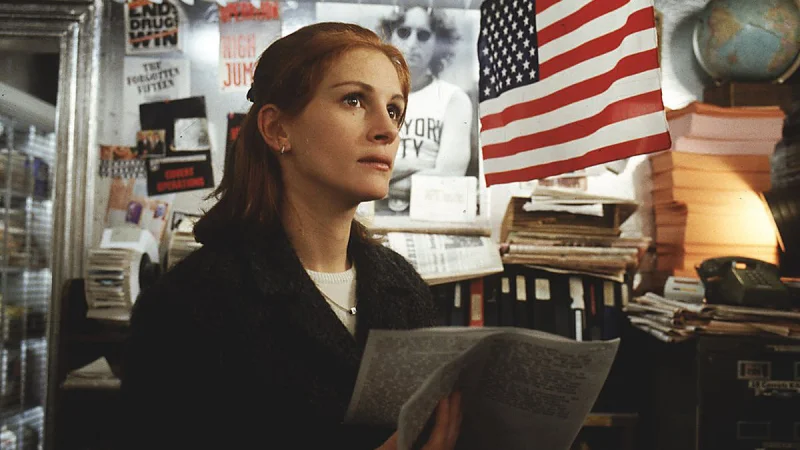
Richard Donner’s Conspiracy Theory is still the kind of 1997 thriller people can fall into fast. Mel Gibson plays Jerry Fletcher, a New York taxi driver who obsessively locks every door in his apartment while talking himself through secret government operations, assassinations, hidden surveillance and UFO coverups.
That is why the film keeps getting searched now: viewers want to know who made it, who stars in it and why Julia Roberts matters so much in the cast. Roberts plays Alice Sutton, a Justice Department worker who lands opposite Gibson in a story written by Brian Helgeland, and the pairing gives Donner’s film its center of gravity.

Conspiracy Theory was released in 1997, but it still feels built for a modern audience that likes its thrillers brisk and slightly unhinged. Donner keeps the movie moving, and Roberts gives Alice enough intelligence and skepticism to make the setup more than a stunt. Gibson, meanwhile, makes Jerry feel half mad and oddly persuasive, which is exactly what the role needs.
The movie’s pull comes from that contradiction. Jerry sounds like a man who has disappeared too far into his own rabbit holes, yet he keeps landing on the kind of details that make Alice — and the viewer — hesitate. The relationship between them is the part the film does not fully resolve in the available material, and that unfinished edge is part of what keeps the story alive.
What matters most is that Donner made a studio thriller that still plays cleanly decades later, with Julia Roberts in a major role and Gibson carrying the film’s nerve. The unanswered question is not whether Conspiracy Theory works as a watchable movie. It does. The real question is how far Alice Sutton and Jerry Fletcher can pull each other before the story tips completely into belief or disbelief.
