


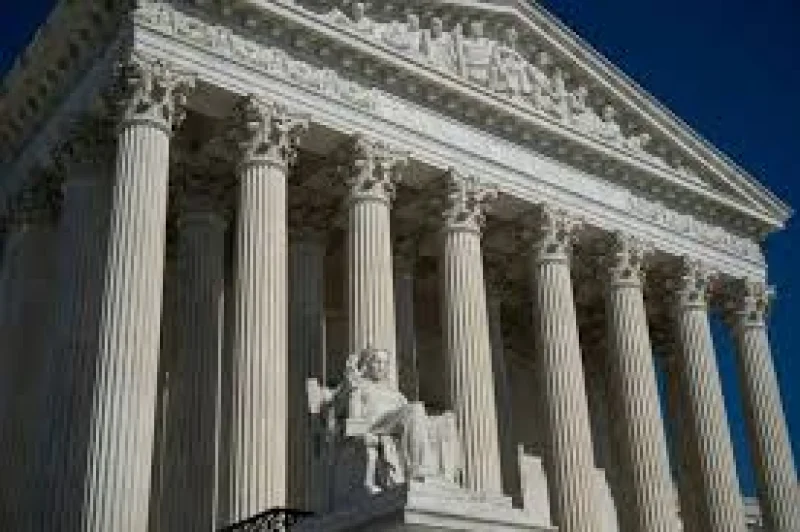
The Supreme Court on Tuesday let Alabama use a congressional map favoring Republicans in this year’s elections, putting on hold a lower court ruling that said the plan intentionally discriminates against Black people. The emergency order means the state can move ahead with districts that leave a majority-Black population in just one of Alabama’s seven congressional seats.
The decision landed now because Alabama had been pressing to lock in its map before special primaries in August, and Gov. Kay Ivey had already extended the deadline to keep that schedule alive. For voters and candidates, the ruling preserves the lines that will shape this year’s races unless the case changes again on remand.
Alabama’s Republican leadership went to the Supreme Court last week after a three-judge court refused to let the state use its preferred map and ordered Alabama to stick with the court-drawn districts it used in the 2024 elections. That map sent two Black Democrats to Congress, and under it Black residents comprise a majority or close to it in two of the state’s seven districts. The state’s newer map, adopted three years ago, gives Republicans the advantage and leaves Black voters with less influence than the court-drawn version.
The justices split on the question. The three liberal justices dissented, even as the conservative majority agreed to lift the injunction blocking the map and send the case back for reconsideration in light of the court’s recent Louisiana ruling, which struck down a Black-majority district and weakened the federal Voting Rights Act. Attorney General Steve Marshall told the court that Alabama did not intentionally discriminate against Black residents and said the state should be allowed to hold elections this year under a map chosen by lawmakers, not judges.
But the lower court had already gone further, saying there was undisputed evidence of intentional racial discrimination in the way the districts were drawn. On Tuesday night, Deuel Ross said the high court’s decision gave cover to Alabama and others to deliberately and openly discriminate against Black voters without fear of any consequence, and called the reinstated map shameless. He said his group would continue to throw all of its resources into the fight for fair representation.
The fight is not over. Voters cast ballots in Alabama’s May 19 primaries, and Ivey has set new special primaries for Aug. 11 in four congressional districts affected by the map switch. The three-judge panel will now reconsider whether the state can keep using a map that a prior court said diluted Black voting power in a state that is about 27% Black — or whether the court-drawn lines that created two competitive Black-majority districts should return again.
