


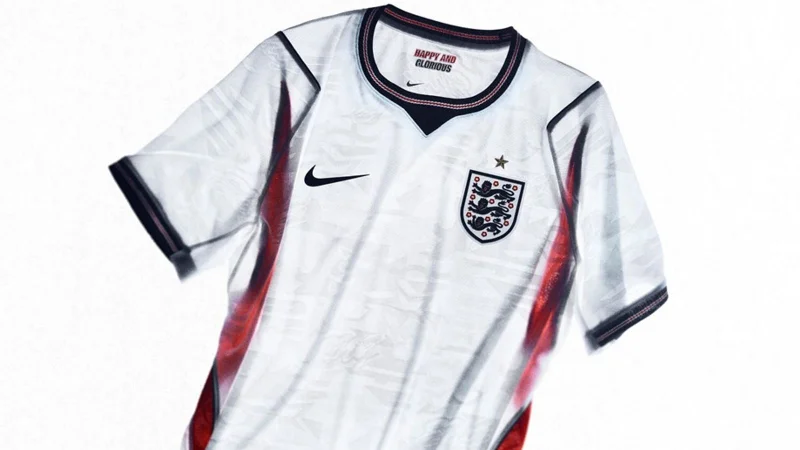
GOAL has ranked England's World Cup squads of the 21st century, putting the latest group chosen by Thomas Tuchel for 2026 into the same frame as the sides that came before it. The comparison runs from 2002 through to next summer's tournament, and it lands on a familiar question for England: how much talent has the country really taken to the World Cup, and how often has it gone unfulfilled?
That question is why England squad numbers are being searched now. Tuchel's first World Cup group for the national team arrives as an updated verdict on more than two decades of selections, one that invites readers to measure the present against the teams that carried bigger labels, louder expectations and, in many cases, more disappointment than success.
The phrase that has shadowed all of it goes back to 2001, when Adam Crozier, then the Football Association's chief executive, called England the 'Golden Generation' after a 5-1 win over Germany in Munich. England had gone 35 years and counting without winning the World Cup, though they had still reached the semi-finals of major tournaments, most notably at Euro 96 five years earlier. The name stuck because the talent looked exceptional on paper. The results never quite matched the billing.
Nowhere is that easier to see than at the 2014 World Cup, the squad that became shorthand for England's failure to bridge promise and production. Steven Gerrard was the experienced captain, Wayne Rooney and Frank Lampard were no longer at their peak, and Daniel Sturridge and Raheem Sterling supplied the energy. Gary Cahill and Phil Jagielka were left to hold together a defence that, in hindsight, was not strong enough. England were drawn with Italy, Uruguay and Costa Rica, lost their opening two games, and were gone before the final matchday after Costa Rica's shock win over Italy. They later crashed out in the last 16.
The damage had been done even before the tournament started. Fabio Capello took a blow on the eve of the 2014 World Cup when Rio Ferdinand was injured in England's first training session after landing in South Africa, forcing Jamie Carragher or Matt Upson to partner John Terry in defence. Rooney and Gareth Barry also went into the competition carrying injuries, leaving England with a squad that mixed youth and experience but lacked enough players in their prime. That imbalance sits behind the ranking as much as any individual result.
GOAL's exercise matters because England's last seven World Cups have featured four managers and, soon, five. Tuchel's side is now being measured against the teams that came before it, but the real judgment will come on the pitch. The ranking can sort the past. It cannot yet tell whether the latest England squad will finally give that old label a meaning the country can use without irony.
