


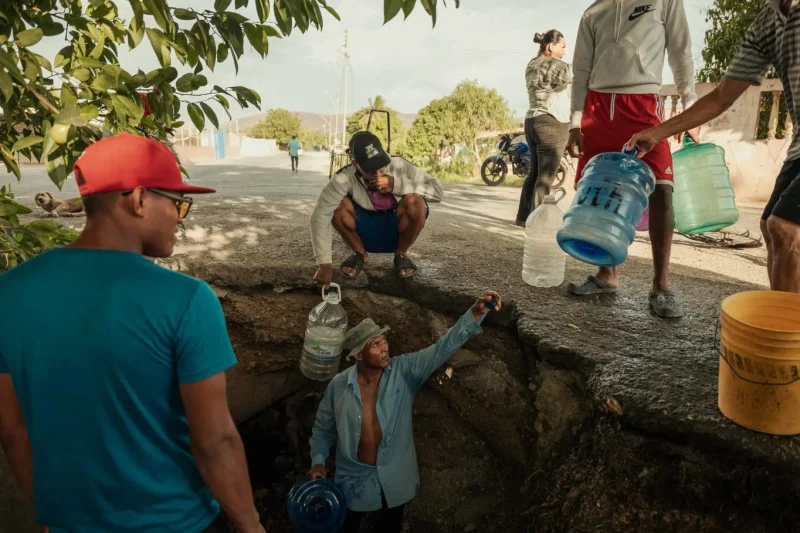
Cumaná now runs on scarcity. The coastal city in eastern Venezuela has extremely scarce drinking water, daily blackouts and abandoned factories, a grim reversal for a place that once sat among the jewels of the country’s industrial base.
José Luis Sánchez put the collapse in a line that landed harder than any statistic. “¿Viste los bombardeos con misiles en Ucrania de los que todo el mundo habla?” he said, before adding, “Bueno, a veces decimos que nuestra ciudad se parece a Kiev.” In a city of about half a million people, the comparison was not about politics or theater. It was about what daily life looks like when power cuts, water shortages and ruin become routine.
The contrast with Caracas is part of what makes Cumaná matter now. While the capital benefits from a boom that leaves it largely insulated from the decay spreading across much of Venezuela, eastern cities such as Cumaná show the other side of the country’s story: a place where former industrial strength has been hollowed out and basic services have fallen apart.
That decline carries a deeper historical weight. When Hugo Chávez came to power 27 years ago, Cumaná was one of the cities helping make Venezuela a regional power. It was a center of the fishing and canning industry in the Caribbean basin, processing large amounts of the tuna and sardines eaten across South America. Its shipyards built commercial fishing boats, and Toyota even operated an assembly plant there that made Land Cruisers.
Then came the state takeovers. Chávez began a wave of expropriations, and Cumaná and the surrounding state of Sucre became a laboratory for those efforts. What was presented as a drive for national food security drained the canning industry of private capital, while the collapse of production in other state companies across Venezuela left the factories without metal cans. Many of the canneries now function only barely, are temporarily closed or have been abandoned altogether. In the Caigüire neighborhood, one cannery stands empty.
The damage has also reached the city’s industrial symbols. The Toyota assembly plant in Cumaná has been halted at times by strikes backed by chavism, underscoring how the same politics that once promised sovereignty helped lock the city into stagnation. In May, a reporter driving through eastern Venezuela from sunrise to sunset passed more than 20 military and police checkpoints, a reminder that the road to Cumaná runs through a country still held tight by control and scarcity.
Cumaná is now a warning about what Venezuela looks like away from the capital: a once-strategic city stripped of water, electricity and productive life, with recovery likely to take generations and no clear answer yet on who will pay for it.
