


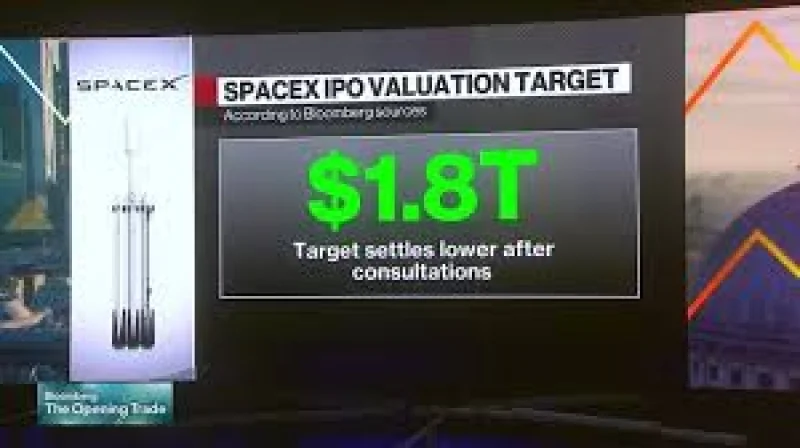
SpaceX’s initial public offering might happen on June 12, and when it does, it is being described as the largest IPO on record. That possibility is pulling fresh attention to the space economy and sending investors looking past Elon Musk’s company to two smaller names that could benefit from the same surge in interest.
One of them is AST SpaceMobile, which is trying to build direct-to-cellular broadband that can deliver calls, texts, data and even live video streaming straight to phones. The company competes with SpaceX’s Starlink product and has agreements with AT&T, Verizon and Vodafone. Its appeal is not just theoretical: AST says it has 5.8 million global mobile subscribers and a $30 million contract with the Space Development Agency for tactical broadband.
That is why the timing matters now. PwC projects the space economy could grow to $2 trillion by 2040, and a SpaceX listing, if it arrives this month, would serve as the industry’s loudest advertisement yet. Investors have already been forced to separate promise from execution in the sector. AST SpaceMobile’s Block 2 BlueBird satellites, which it describes as the largest commercial phased-array antennas ever deployed in low Earth orbit at up to 2,400 square feet, are central to that test.
The problem is that the sector keeps reminding investors how hard space really is. Last month, Blue Origin’s New Glenn launch vehicle deployed one of AST SpaceMobile’s satellites too low in orbit, rendering it unusable, and the company de-orbited it. The setback did not erase its plans, but it did underline the gap between ambition and hardware. AST is still planning to launch its next batch of three satellites sometime in June and says launches will come every one to two months, backed by multiple launch providers.
Management still believes it can reach 45 satellites by the end of this year, even after entering 2026 with plans to deploy 45 to 60 satellites. That goal matters because the company is trying to move from a handful of experimental launches to a real network for service at scale. Intuitive Machines is taking a different route to the same market rush, leaning on government work and lunar infrastructure rather than direct-to-phone connectivity.
The company made its name by achieving the first U.S. lunar landing since Apollo 17 in 1972 a couple of years ago. Since then, it has broadened into aerospace and space infrastructure, including robotic landers, ground stations, satellites for communications and related components. Earlier this year, it won $429 million in new contracts, driven in part by the Space Development Agency’s push for a 72-satellite network to detect, track and warn against advanced missile threats, and it also received a $180 million NASA commercial lunar payload services contract.
Its most recent numbers show why investors are paying attention. Intuitive Machines tripled first-quarter revenue to $186.7 million and ended the period with more than $1.1 billion in backlog, up $842 million from the end of last year. It says about 60% of that backlog should convert into revenue this year. The SpaceX IPO date is still not formally confirmed in the facts at hand, but if June 12 holds, the market will get a high-profile reminder that the space trade is no longer just about rockets. It is about whether the smaller companies can turn contracts, launches and customer promises into something that lasts.
