


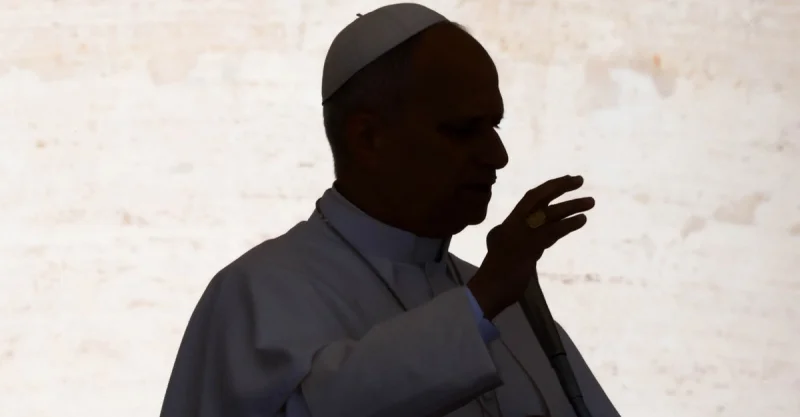
Pope Leo XIV has issued a new encyclical, Magnifica Humanitas, that calls for artificial intelligence to be disarmed and stopped from dominating humanity. In the document, the pope argues that governments need adequate regulatory tools to uphold justice and curb the distorting effects of technological power.
The encyclical has drawn widespread praise for its sharp criticism of AI, and that is part of why readers are searching for it now. But the appeal of the text is only the first layer. Leo’s warning is not just about chatbots, software or the companies building them. It is about the human and economic machinery that makes AI possible in the first place, and the systems that decide who pays the price.
Leo writes that AI is built on energy-intensive infrastructure and says more sustainable technological solutions are needed to reduce environmental impact and protect “our common home.” He also argues that technology “promises emancipation” for the stable and secure while it “produces new forms of global subordination” for people in precarious situations. In his telling, nothing in AI is immaterial or magical. Every apparently instant answer, he says, rests on a long chain of mediation that runs through natural resources, energy networks and people.

That is where the encyclical goes further than much of the praise surrounding it. The pope points to workers “working under demanding conditions for minimal wages” and says that, in some parts of the world, children and adolescents are sent into dangerous conditions crushing the materials from which rare earth elements are extracted. He calls the result “a form of slavery.”
The focus on AI itself can obscure the breadth of that critique. Leo is not only warning that machines may become too powerful. He is saying the current model of technological progress depends on labor, extraction and social arrangements that already leave the weakest people carrying the load. AI, in his account, has accelerated a problem that existed long before the latest wave of automation: an order that places ultimate value in technology, economics and unconstrained individualism.
What comes next is still the open question. Leo has made the case for regulation strong enough to restrain AI, but he has not laid out a specific policy package or enforcement path. For now, Magnifica Humanitas lands less as a tech manifesto than as a warning that any serious answer to AI has to confront the workers, children and energy systems hidden behind the screen.
