


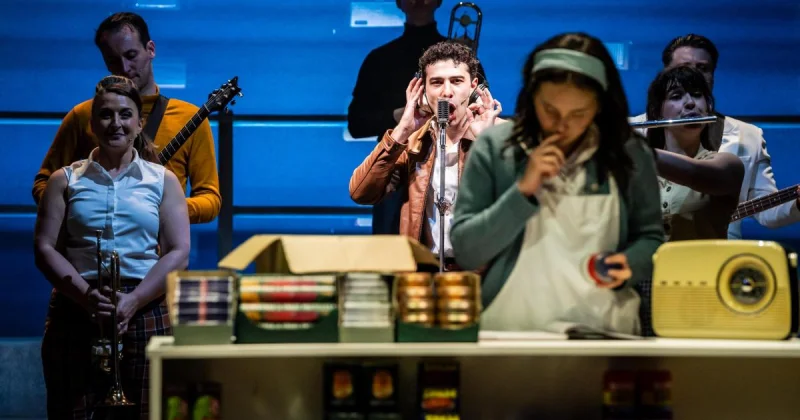
Vikki Stone’s new musical about Radio Caroline is on tour across East Anglia now, and she says it has been built as much to show off local stagecraft as to tell the pirate-radio story that inspired it. The show, Caroline, is the first production launched by the East Anglia Touring Consortium and is heading next to the Mercury Theatre in Colchester before ending its run at the Theatre Royal in Bury St Edmunds next month.
Stone, who visited Radio Caroline’s ship before she started writing, said the trip helped her understand the scale and feel of life on the water and gave her a close sense of what it might have been like for the characters to go aboard. She spent up to three years piecing the piece together and said the production drew on a real appetite for the story, not just among theatre audiences but among people still intrigued by the station that began broadcasting from a ship moored off Essex on 28 March 1964.
The show follows fictional Robbie Jackson, a young man who answers a newspaper ad to become a disc jockey, and Stone said the character was inspired by broadcasters including Tony Blackburn and Johnnie Walker. In her telling, Caroline is not just a history lesson about a single station but a wider portrait of pirate radio and the pressure it put on the, which now has a far broader range of stations than it did then.
That wider view helped shape the script, and Stone said the East Anglia Touring Consortium format made practical sense for a new work because it spreads the risk of launching something untested. She said the company has been able to make a high standard of production by drawing on talent from the East of England, something she described as a source of pride and proof that regional theatres can mount ambitious work without depending on London to do it.
The route has not been simple. Stone secured rights for songs by The Rolling Stones, The Who, The Kinks, The Beach Boys and The Beatles, but at least two requested songs were turned down, forcing the team to rethink parts of the score. She said the substitutions improved the show, arguing that the setbacks led to better choices rather than weaker ones.
Caroline has already played the New Wolsey Theatre in Ipswich, the Queen’s Theatre in Hornchurch and the New Theatre in Peterborough, and the next leg will test whether that regional momentum can keep building. The production was also shaped by the history of pirate broadcasting itself: the Marine etc Broadcasting (Offences) Act 1967 made it a criminal offence for British citizens to work for or help run pirate stations, turning the world that Caroline celebrates into something the law was trying to shut down.
For now, the musical’s value is less in nostalgia than in how it has travelled. Stone’s point is blunt: East Anglia can mount a show about one of Britain’s most rebellious broadcasting stories, and do it with local talent at the centre. If the remaining dates draw the same response as the first stops, Caroline will have done more than revive a famous ship; it will have made a case for a touring model that may outlast the run itself.
