


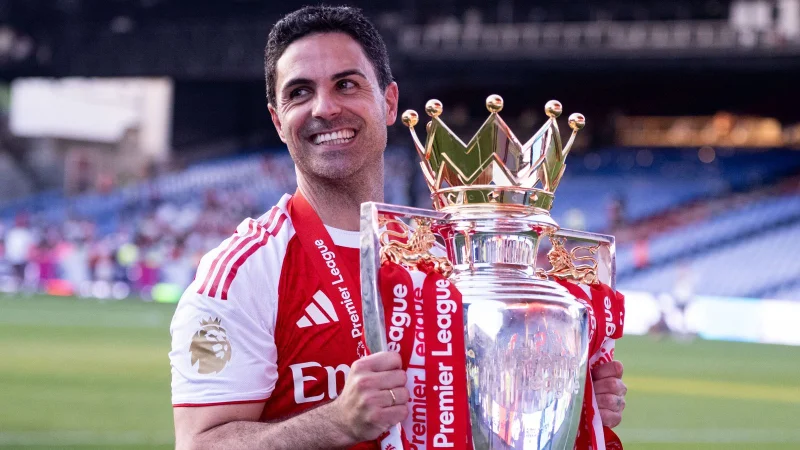
Mikel Arteta's road to the Champions League final is being read backwards, through the people who saw him before the touchline and before the headlines. In that version of him, the Arsenal manager was already the player others leaned on for answers, even if he was still a teenager in Gipuzkoa or a youngster at Antiguoko in San Sebastián.
That is why Santi Cazorla's memory lands now. Injured together at Arsenal, the two used to watch games at home, and Arteta would grab the remote, pause a match and rewind it. Cazorla would ask why he had stopped it, and Arteta would ask, as if he were already working from a coaching manual, what he could see in the frame.
Cazorla said Arteta would break down the shape of the play in real time, pointing to a player standing too high, a pivot that should move, or a line that needed to drop. Cazorla admitted he loved football and could watch it all day, but he still did not notice the details Arteta picked out instantly. “He was a coach already,” Cazorla said, and the remark now reads less like praise than diagnosis.
That habit fits the way Arteta was remembered long before he became Arsenal manager. Jon Ayerbe said he caught your attention very young and called him “alive”, while Álvaro Parra said he was the most intelligent player they knew. Mikel Yanguas, watching him as a youth, reportedly said: “Bloody hell, he’s got something special. If anyone makes it, it’s him.”
Arteta's early football was shaped in the Basque Country, where he began training at Athletic Club at 14 after coming through Antiguoko, the San Sebastián youth club that took on professional academies and won. Those who watched him then said he was tiny, two-footed and already operating as a No 10 before later settling into the No 4 role, a player with enough clarity to stand out in any age group. Roberto Montiel called him “a born sportsman” and recalled a goal against Real Sociedad that reminded him of Lionel Messi.
The part that makes the present feel inevitable is that Arteta did not look like a future manager because he was told he should be one. He looked like one because he already played that way, and because he kept seeing the game a step ahead of everyone else. Parra said he later left everything behind for Barcelona, and that same willingness to choose the hard path showed again when he turned down lucrative offers from Dubai, Qatar and the US to work with Pep Guardiola at Manchester City because it was the right step.
That is the point of the renewed look at Arteta now, with Arsenal heading into the final: his rise did not begin with a coaching badge or a title run, but with habits formed in Gipuzkoa and San Sebastián, and with people around him noticing, years ago, that he was already thinking like the man who would one day take Arsenal this far.
