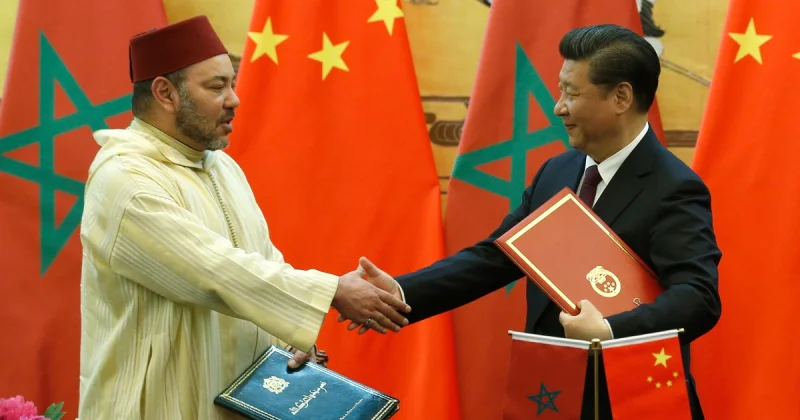
Morocco is becoming a key base for China’s green industrial push, drawing more investment into renewable energy, batteries and electric vehicle supply chains as Beijing looks for safer, closer routes into Europe. The shift has made the kingdom a more important part of the ft around clean manufacturing, with Chinese firms treating it as a place to build, ship and diversify at the same time.
The timing matters because conflict in the Middle East is forcing governments and companies to rethink trade routes, energy security and manufacturing networks. A Washington-based think tank said that backdrop has given the China-Morocco partnership greater strategic weight, and Morocco’s position on the edge of Europe makes it easier for manufacturers to serve markets there without crossing the chokepoints that worry global shippers.
Chinese investment in Morocco has grown since the North African country joined China’s Belt and Road Initiative in 2017. Companies have taken stakes in major projects including the Noor solar complex in Ouarzazate, while others are building operations focused on batteries and EV components. Morocco’s appeal is not only geographic. It holds some of the world’s largest phosphate reserves, has a well-developed automotive sector and offers direct access to European markets.
Industrial zones such as Tanger Tech City near the Tanger Med port complex have become focal points for that momentum. They give manufacturers the logistics infrastructure and export links needed to move goods efficiently, which is exactly why Morocco is being cast as a politically stable platform for green manufacturing and supply-chain diversification. For Chinese firms looking to expand without overexposing themselves to geopolitical risk, that combination is hard to ignore.
But the expansion is not frictionless. Morocco is attracting green industrial investment while still relying heavily on imported energy, which leaves it exposed to fuel price shocks and disruptions along regional supply routes. The Stimson Centre also said electricity transmission infrastructure remains a constraint even as renewable energy capacity expands. That means the country can draw factories in, but keeping those plants powered and connected at scale is a separate challenge.
The unresolved question is how far the new industrial logic can go before those limits slow it down. Chinese companies are already positioning Morocco as a bridge to Europe, but the next phase will depend on whether the country can turn investment interest into larger production capacity without running into the same energy and grid bottlenecks that have shadowed its clean-power ambitions. For now, Morocco is no longer just a destination for projects. It is becoming part of the strategy.