


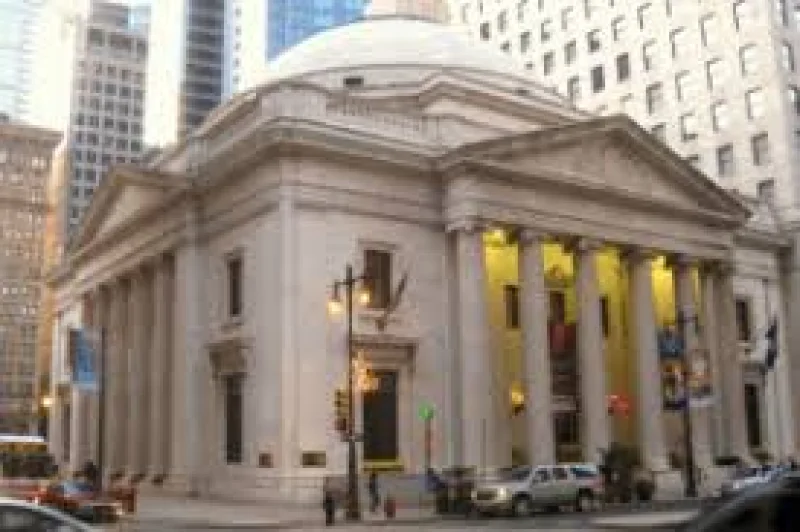
Rand Spear – The Accident Lawyer is pointing clients toward a narrow stretch of Midtown Village in Philadelphia where rideshares, delivery vans, buses and pedestrians all crowd the same blocks. The firm says it handles Uber and Lyft crashes on the 13th Street nightlife strip, along with other injury claims tied to a corridor that was built for foot traffic and horse-drawn delivery long before modern vehicle volume started squeezing into tight curbs.
That matters now because Midtown Village runs along South 13th Street between Chestnut and Locust, inside Washington Square West, and feeds three SEPTA stations on its perimeter. On a block-by-block map of risk, the picture is less about one dangerous intersection than a dense set of pressure points: Broad Street on the western edge, Chestnut and Walnut carrying heavy turn movement at 12th, 13th and Broad, and bus Routes 9, 12, 21, 23, 38, 42 and 47 crossing the neighborhood.
The firm says its attorneys bring more than 200 years of combined experience to those cases and have recovered $1 billion in verdicts and settlements for injured clients across Pennsylvania and New Jersey. It says it handles SEPTA claims, car crashes at Broad and Walnut, last-mile delivery truck cases, pedestrian strikes at the Convention Center corner and rideshare injuries on the 13th Street nightlife strip. For readers looking for a truck accident attorney, that mix shows how the practice is framing Midtown Village not as a single crash scene but as a cluster of claim types that can look very different depending on where they happen.
The neighborhood’s layout helps explain why. Midtown Village was carved out of William Penn’s 1682 grid for Center City, and its blocks were laid out for foot traffic and horse-drawn delivery, not two-way motor vehicles. Pre-automobile alleys such as Camac, Drury, Quince and Latimer now absorb rideshare drop-offs, delivery vans and trash trucks at sidewalk scale, while the Pennsylvania Convention Center on the north edge sends truck and bus staging onto Arch and Race during shows. Even the late-evening pull of Vetri Cucina and El Vez pushes pickups onto the spine, turning what once functioned as a passage for slow local movement into a corridor where every curb space has to do too much work.
That friction shows up in the claims the firm highlights. A crash near Walnut–Locust Station can involve different pressures than an event-truck collision outside the Convention Center or a rideshare strike on the 13th Street nightlife corridor, and the law gives those cases different deadlines too. Under Pennsylvania law, personal injury claims generally must be filed within two years of the crash, while cases involving the City of Philadelphia, PennDOT or SEPTA require written notice within six months. In a neighborhood where the street design still reflects an older city and the traffic load does not, the next step for injured people is not just figuring out fault. It is moving before the clock runs out.
