


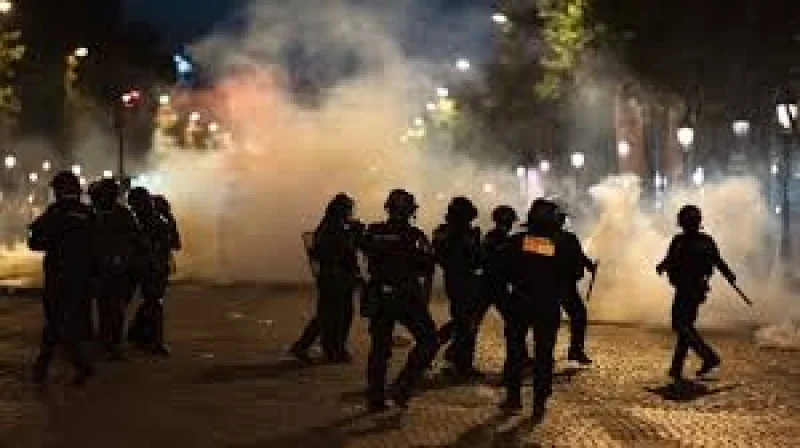
Paris Saint-Germain's Champions League final win over Arsenal was supposed to send supporters into celebration. Instead, it left 416 people arrested across France, seven police officers injured and parts of Paris thrown into disorder as clashes spread through the capital and beyond.
Authorities said 280 of the arrests were in Paris, where thousands of officers were deployed to hold back the disorder after fans gathered on the Champs-Élysées on Saturday night. Police fired tear gas to break up crowds in the city centre, while bus, train and rail services in Paris were disrupted and six vehicles, two businesses and a bus shelter were damaged.
That scale made the unrest impossible to dismiss as a few isolated flare-ups. It followed a penalty shootout that gave PSG the trophy and quickly turned the city's celebrations into a security operation, with the early-hours arrest tally landing on Sunday just as the country was waking up to the damage. Laurent Nuñez called the unrest absolutely unacceptable and said there had been a very robust, very solid system in place.
That is what makes the violence more unsettling: officials said they were better prepared this time, after similar scenes when PSG won the same trophy last year and celebrations turned deadly. Yet the crowd control plan still ended with officers hurt, transport hit and dozens of streets and businesses bearing the cost of a victory party that spilled far beyond the stadium.
The next test comes on Sunday afternoon, when PSG players are due to take part in a victory parade that will tour the Champ-de-Mars beside the Eiffel Tower before a reception with French President Emmanuel Macron. Marine Le Pen seized on the unrest by saying only in France does a football club's victory spark riots and only in France do people feel they must lock themselves in their homes on the evening of a victory to avoid violence.
For now, the numbers tell the story: more than 400 arrested, seven officers injured and a celebration that authorities tried to contain but could not fully control. Whether the parade passes quietly or becomes another flashpoint will say a lot about how far the anger and the policing can be separated.
