


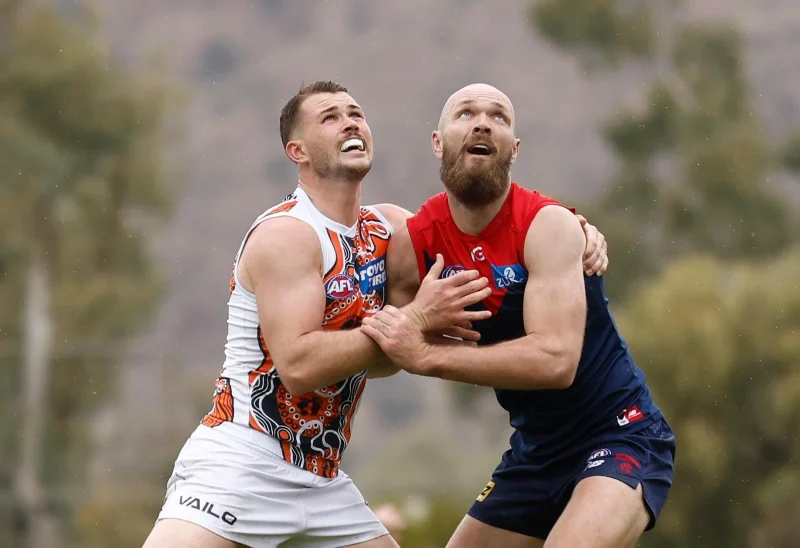
Melbourne and Greater Western Sydney met at TIO Traeger Park in Alice Springs on Sunday in a round 12 AFL clash shaped by the kind of form that can change a season. Melbourne came in at 7-4, while the Giants arrived at 5-6 and still trying to turn one breakthrough win into something steadier.
The matchup drew extra attention because Melbourne had missed a chance to climb into the top four against the Western Bulldogs, then headed back to a ground where it had lost its past three matches. Greater Western Sydney, by contrast, had just blown Brisbane apart with a record-breaking 14-goal third term, a result that revived its finals hopes without erasing the fact it was still looking for back-to-back wins for the first time this year.
Team selection gave the game a sharper edge. Melbourne was without injured defender Jake Lever and managed Changkuoth Jiath, while Max Gawn was again expected to carry most of the ruck load. Brody Mihocek and Latrelle Pickett returned, Andy Moniz-Wakefield came in for his second game of the year, and Max Heath was omitted.
The Giants made their own changes, with Lachie Whitfield, Leek Aleer and Sam Taylor all included. Taylor was back for his first game of the season, a significant return for a side that had already won its only previous match in Alice Springs in 2023 and had beaten Melbourne in each of the past three meetings by a combined seven points. Jack Buckley and Jake Riccardi were both unavailable through injury, and Harrison Oliver was omitted.
That history hangs over every Melbourne-Greater Western Sydney meeting now, especially in Alice Springs. Melbourne unravelled in a nailbiter against the Giants there in 2023, and that memory sits alongside the club’s wider concerns on the road at the venue. For the Giants, the challenge was different but just as pressing: a season that had flickered back to life still needed the follow-up act they had not managed to produce.
What happens next depends on the result not included here, but the stakes were already clear before the first bounce. Melbourne needed to reset its push back toward the top four, while Greater Western Sydney needed proof that last week’s Brisbane outburst was the start of a surge rather than another sharp but isolated spike.
