


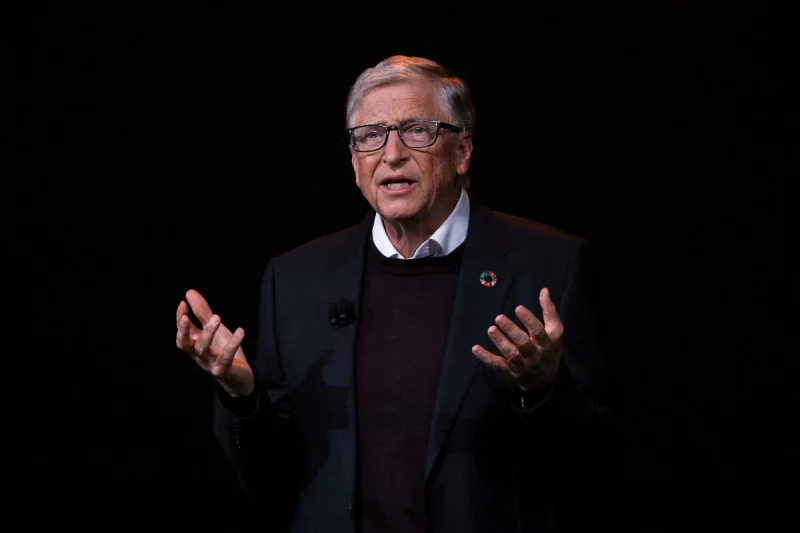
Bill Gates is facing one of the sharpest reputational reversals of his public life as the Gates Foundation opens an external review of his relationship with Jeffrey Epstein. The review lands after years of scrutiny over Gates’ time with Epstein in the early 2010s, a period that has now become central to how his legacy is being judged.
The renewed focus matters because Gates was once the leading face of American philanthropy, the co-founder of Microsoft and the architect of the Bill & Melinda Gates Foundation, which has spent years steering money toward healthcare in Africa and the Indian subcontinent. He launched a movement in 2010 urging the world’s billionaires to give away at least half of their wealth, a standard that helped define modern giving among the superrich.
That model is now under strain. Warren Buffett told CNBC on March 31 that he had not spoken to Gates since the Epstein matter came out and said he had stopped donating to the Gates Foundation. Buffett’s break matters because he has long been one of the most important allies in Gates’ charitable universe, and his decision signals that the fallout has spread beyond public criticism into the support system that once helped legitimize the foundation.

Gates has not been charged with any crime, but the damage to his standing has been severe. The issue is not only what happened in the past, but what his association with Epstein, who died by suicide in a New York prison in August 2019, has come to represent now: a widening gap between the moral authority Gates claimed for philanthropy and the scrutiny attached to his own judgment. The foundation’s outside review is meant to confront that gap directly, even as it raises the possibility of more embarrassment rather than closure.
The broader backdrop is a philanthropic movement losing its hold on the people it was built to influence. Bill Gates’ giving pledge is falling apart as tech billionaires increasingly question whether they need a traditional charity model at all. Jeff Bezos never signed the pledge, and Elon Musk, who did sign it in 2012, has signaled his own doubts about the idea of giving wealth away in the first place. The result is a world in which Gates is still trying to defend the ideal he popularized while his peers move toward a harsher view: that their companies, not their foundations, are what serve society.
For Gates, the review is the next test, and it is a narrow one. It will not decide the Epstein case, but it may decide whether one of the world’s most powerful foundations can still present its founder as a credible moral force while it investigates the relationship that has done so much to erode that image.
