


France’s World Cup squad selection has become so crowded with elite talent that the players left out of the 26-man cut would still rank among the world’s top five teams by value. Transfermarkt puts the omitted French lineup at 418 million euros, a figure that helps explain why Belgian defender Thomas Meunier said France has the footballing talent to field three teams capable of winning the World Cup.
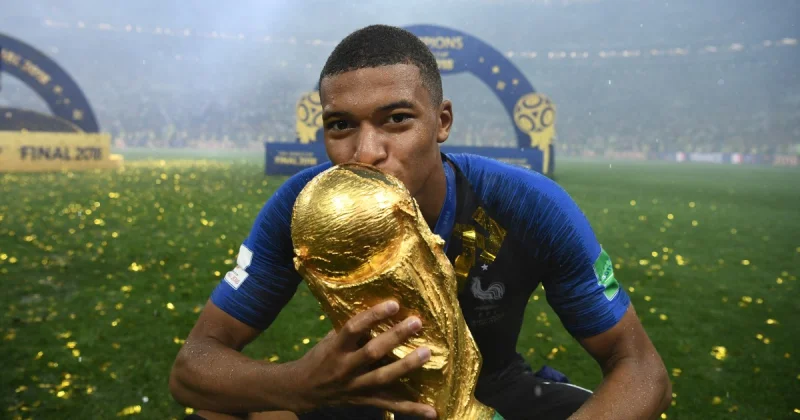
That depth matters now because France are co-favourites with Spain at this summer’s World Cup, and the question is no longer whether the country can produce elite players. It is whether it can turn a system built to create them into another title run, after winning the trophy at home in 1998 and again in 2018, and finishing runners-up in 2006 and 2022.
The scale of the talent pool is the product of a decision France made after decades of underachievement. In the early 1970s, national team manager Georges Boulogne said the French Football Federation needed to create a new structure. The response was the Centres de Formation, with 16 centres eventually set up and the first opening in 1974 at the main site in Vichy. The idea was simple: produce more players, and better ones, by making development part of the national project.
It worked, and then some. France won the European Championship and Olympic Games titles in 1984, reached two World Cup semifinals in the 1980s, then stumbled badly by failing to qualify for the 1990 and 1994 tournaments. The system later produced the home triumph in 1998, another title in 2018 and a steady stream of squads deep enough to keep France near the top of world football.
Bernard Lama, who lived through the earlier era, said the difference with his generation was that all the players came from academies, and that they were hungry to win a title. He also pointed to Zinedine Zidane as the one exceptional talent in that group. But Lama did not gloss over the contradiction in France’s history: earlier generations had plenty of class, including the 1980s sides with Michel Platini, Alain Giresse and Jean Tigana, yet they still did not win a World Cup.
Lama also linked that rise to France’s wider identity, saying people coming from overseas — Africa, French Guyana and Martinique — gave the country “music and sports.” He added that a younger wave of players from those backgrounds is now fully French rather than naturalised, with names such as Ousmane Dembele and Desire Doue showing how broad the pipeline has become. In that sense, the strength of the france world cup squad is not an accident of one cycle. It is the result of a structure built over decades.
The unresolved part is how all of that depth will be used when the tournament starts. A country able to leave out players who would still make a top-five squad by value has no shortage of options. What it still has to prove is that quantity, academy schooling and inherited talent can be assembled into the one thing France’s earlier generations could not consistently secure: another World Cup.
