


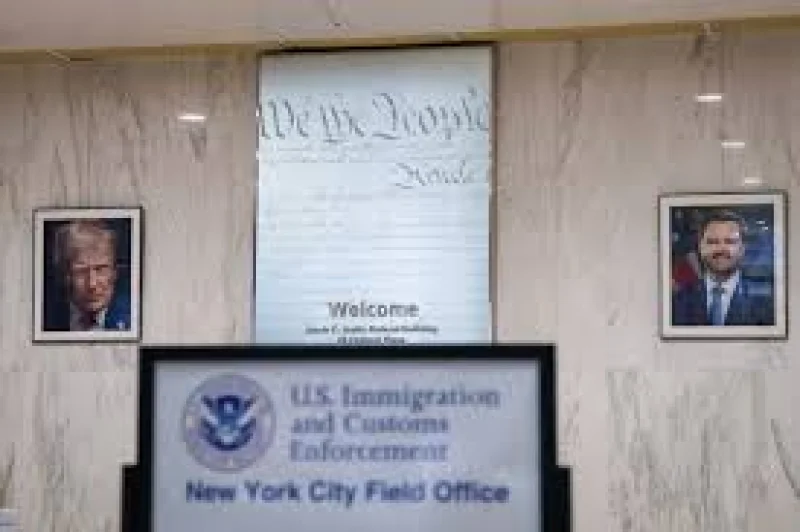
A new USCIS memo issued last week could force many people already living in the United States to leave the country and pursue green cards through consular processing abroad. For visa holders who have built jobs, marriages and homes around the expectation they could finish the process inside the country, the change landed as a jolt.
The move matters now because it reaches beyond a narrow paperwork dispute and into the lives of people trying to turn temporary status into permanence. A 34-year-old Indian software engineer in Washington said he put a significant share of his life savings into the EB-5 investor program, hoping to secure a green card faster and create stability for his family. Under that program, foreigners can seek permanent residency by investing several hundreds of thousands of dollars in a U.S. enterprise that creates at least 10 full-time jobs for American workers.
USCIS has long offered two main paths to permanent residency: applicants can go through a U.S. consulate overseas or apply from inside the country through adjustment of status. The new memo appears to narrow that choice for many applicants already in the U.S., and the agency has given no public list of who will be required to leave while cases are pending.
That uncertainty is what is driving the fear. A USCIS spokesperson said last week that the agency is simply restating and reasserting its interpretation of congressional intent on immigration status changes. But the same spokesperson also said applicants whose filings provide an economic benefit or otherwise are in the national interest will likely be able to continue on their current path, while others may be told to apply abroad depending on individualized circumstances. That carveout complicates any claim that the memo means every foreign applicant must pack up and leave.
The confusion has already spread through families that thought their cases were moving ahead inside the country. A 30-year-old Portland, Oregon, resident said her Mexican husband received a green card through adjustment of status in February, but because they have been married for less than two years, his residency is conditional and lasts only two years before he can apply for a 10-year green card or U.S. citizenship.
The broader shift reflects a harder line on legal immigration pathways, not just unauthorized entry. The H-1B visa, which allows foreign workers to remain in the U.S. while pursuing lawful permanent residency, has been a common bridge for applicants who expected to stay in place as their cases moved forward. If USCIS applies the new memo broadly, that assumption may no longer hold for everyone, especially those whose cases do not fit the agency’s view of economic benefit or national interest.
What happens next now turns on how the agency writes the rules for implementation. USCIS says individualized circumstances will matter, which leaves open the central question for thousands of applicants already in the country: who gets to keep moving forward here, and who will be told that the only path to a green card now runs through home.
