


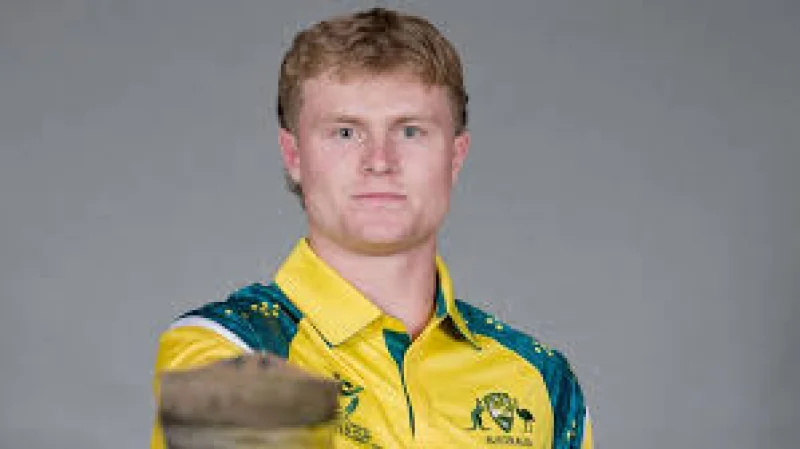
Oliver Peake will make his men’s one-day international debut for Australia in Rawalpindi on Saturday, becoming the 252nd Australian to play the format and the country’s youngest specialist batter in men’s ODI cricket.
Peake is 19 years and 261 days old, and his selection gives Australia a teenager in the middle of a Pakistan tour that is already missing several front-line names. Josh Inglis, captaining the side for this leg of the winter white-ball trip, said it was “incredibly exciting” for Peake and added that he had “been great value around the group already so far” after what he has done over the past couple of years.
The debut is the clearest sign yet of how quickly Peake has moved through Australia’s pathways. The Victorian from Geelong played a leading role in Australia’s U19 World Cup title win in 2024, when he was 17, and now he is set to walk into senior cricket in the first match of the Pakistan leg. His mark will arrive before a ball is bowled in Rawalpindi tonight, turning a routine team announcement into a record moment.
That record matters because Peake is not just another newcomer. Ricky Ponting was 20 years and 58 days old when he made his ODI debut against South Africa in New Zealand in February 1995, while Pat Cummins remains Australia’s youngest ever ODI debutant at 18 years and 164 days. Peake will not match Cummins, but he will move above Ponting and into a place that shows how unusual this call-up is for a specialist batter.
Australia’s selection also reflects the patchwork nature of this tour. Mitch Marsh is sidelined by an ankle injury picked up at the IPL, and Inglis said it was “obviously disappointing to lose our skipper,” calling Marsh “a big part of the group” and “a fantastic player as well.” Cooper Connolly was added late after Marsh’s withdrawal, though he is not currently bowling because he is managing a back issue.
There is another return in Rawalpindi that says as much about resilience as it does about selection. Billy Stanlake is also in line to play his eighth ODI, having not been around the Australian group since 2019. Inglis called it “a great story” and said Stanlake had shown the resilience to get back on the park after good performances last year. Australia is likely to lean on Nathan Ellis and Stanlake with Riley Meredith available for pace, while Adam Zampa, Matthew Kuhnemann and Tanveer Sangha provide the frontline spin options and Matt Short offers a slow-bowling allrounder option.
The broader picture is straightforward enough. Australia is managing a winter white-ball tour that also includes six matches in Bangladesh, while selectors juggle short-term results against a schedule that stretches toward as many as 21 Tests in a 12-month block from August. For Peake, that means the door has opened quickly and unexpectedly. What remains unresolved is how many more changes Australia will make before the first ball in Rawalpindi, with the rest of the XI still not fully confirmed.
