


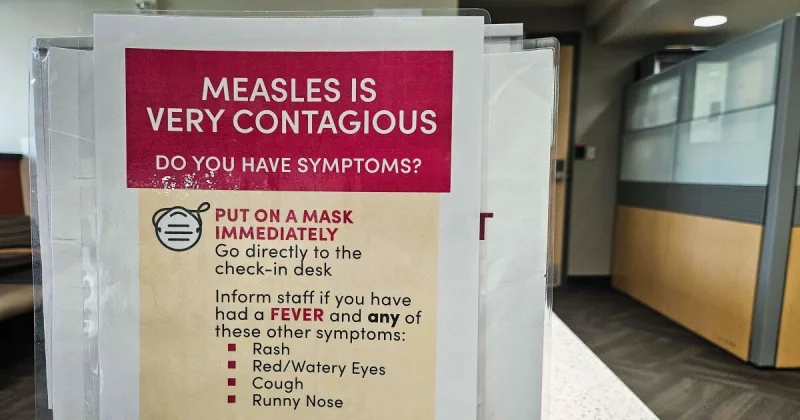
Utah’s measles outbreak is cooling, with new cases falling to fewer than 10 a week after surging into the 50s in March. But infectious diseases expert Dr. Andrew Pavia says the slowdown should not be mistaken for the end of the outbreak.
Pavia said Utah and the broader United States should expect more measles outbreaks, even as the state’s weekly case counts ease. He said he is on calls every couple of weeks with other Utah doctors and the state health department to discuss infectious diseases, and he described the current pattern as a reminder that measles can reappear wherever vaccination gaps remain.
Utah has recorded 673 confirmed measles cases since last summer, including 476 this year alone. The outbreak began in a remote community that straddles the Arizona border and then spread statewide, making it one of the clearest examples yet of how quickly the virus can move once it finds the right conditions.
Pavia compared those conditions to wildfire fuel. He said unvaccinated people are the spark’s biggest help to the virus, and that herd immunity depends on more than 95% of people being vaccinated. Measles, he said, is many times more contagious than COVID, Ebola or hantavirus, which gives public health officials very little time to contain an outbreak once it starts.
That is why the recent drop in Utah’s numbers has not changed the bigger warning. Pavia said pockets of very low immunization rates leave Utah and other places at risk, and he said one spark in a school with high vaccine-exemption rates could set off another outbreak in the fall. Until vaccine coverage improves, he said, the state and the country should anticipate more flare-ups rather than assume the virus is retreating for good.
Measles has officially been declared eliminated in the U.S. since 2000, but Pavia said he strongly believes the country will lose that status when an international panel reviews it this fall. He said the United States will face ongoing measles challenges for the next several years, and added that he hopes Utah gets a brief break over the next couple of months before the next test arrives.
The question now is not whether the outbreak has slowed. It has. The question is whether Utah’s low-immunization pockets are still large enough to let the virus catch fire again when the weather, school calendar and travel patterns line up later this year.
