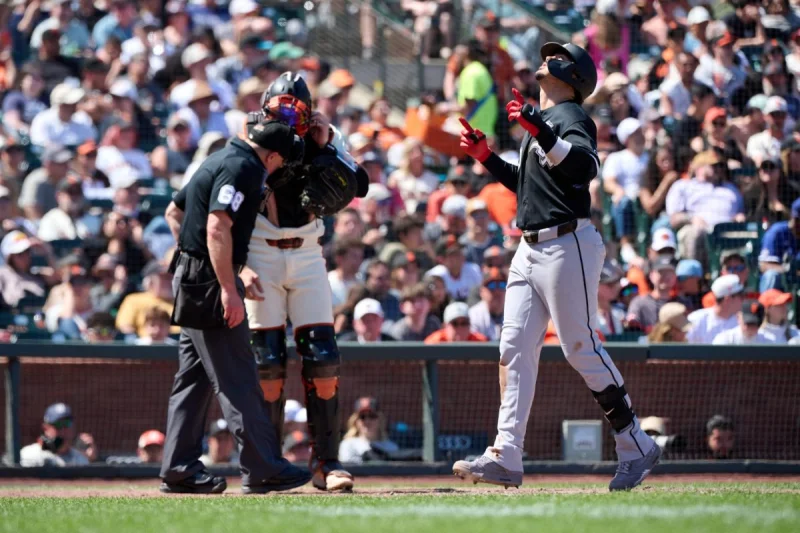
Miguel Vargas is no longer being treated like a reclamation project. After a strong first two months of 2026, he got a straight verdict from a fantasy analysis: legit.
That call lands now because Vargas, who the White Sox acquired from the Dodgers in 2024, has turned 225 plate appearances through Monday, May 25, into one of the most useful lines on the roster. He was hitting.239/.369/.489 with a 142 wRC+, along with 37 runs, 12 home runs, 31 RBI and eight stolen bases. Over the current month alone, he had 91 plate appearances, a.273/.374/.558 slash line and a 160 wRC+, with 15 runs, six homers, 16 RBI and three steals. For a player who had not been caught in eight stolen-base attempts, the power-speed blend is doing the heavy lifting.
The performance matters because Vargas did not arrive here by accident. He had three poor partial seasons in the majors before 2025, then posted a 101 wRC+ last year for his first real sign of stability. This spring has gone well beyond that. He is on a 35-homer, 25-steal pace, and the underlying numbers help explain why: his average swing speed jumped from 70.6 mph to 73.9 mph, which pushed him from the 25th percentile to the 72nd percentile. He also owns an elite 15.4 percent barrel rate and a five-point rise in his hard-hit rate.
That is enough to make him useful, and possibly more than useful, even if the ceiling is not limitless. The same analysis that called him legit also noted that limited batting average upside may keep him from ever becoming an elite option at the hot corner. That is the tradeoff with Vargas. He can give a fantasy lineup power, speed and volume, but he may never be the kind of third baseman who carries batting-average categories the way the true stars do.
Still, the broader picture around him is improving. The White Sox offense has moved from bottom five to top half with Vargas' emergence and the signing of Munetaka Murakami, which gives his production more context than just a hot streak on a weak club. The question now is not whether Vargas has forced his way into relevance. He has. The question is whether the bat speed, the harder contact and the stolen-base success can hold long enough to turn a breakout through May 25 into something that lasts all summer.