


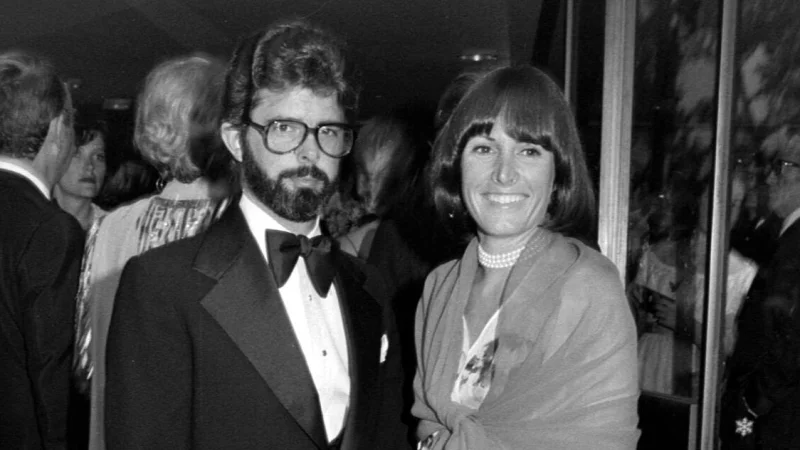
Marcia Lucas, the Oscar-winning editor who helped shape the original 1977 Star Wars, has died at 80 after a battle with metastatic cancer, her family said. She was the quiet force behind some of the franchise’s most memorable early scenes, including the Battle of Yavin trench run that helped turn a space adventure into a cultural event.
Her family remembered her as a brilliant storyteller, a trailblazer for women in film, and a loving mother and grandmother whose influence on movies was indelible. The death brings renewed attention to a figure who helped define Star Wars long before it became a sprawling global franchise.
Lucas won the Academy Award for Best Film Editing for Star Wars, the film that first took audiences to a galaxy far, far away, and she was part of the editorial team for both that movie and Return of the Jedi. She was also married to George Lucas from 1969 to 1983, a relationship that placed her close to the center of the creative world around the saga even as her own work was often discussed less than his.
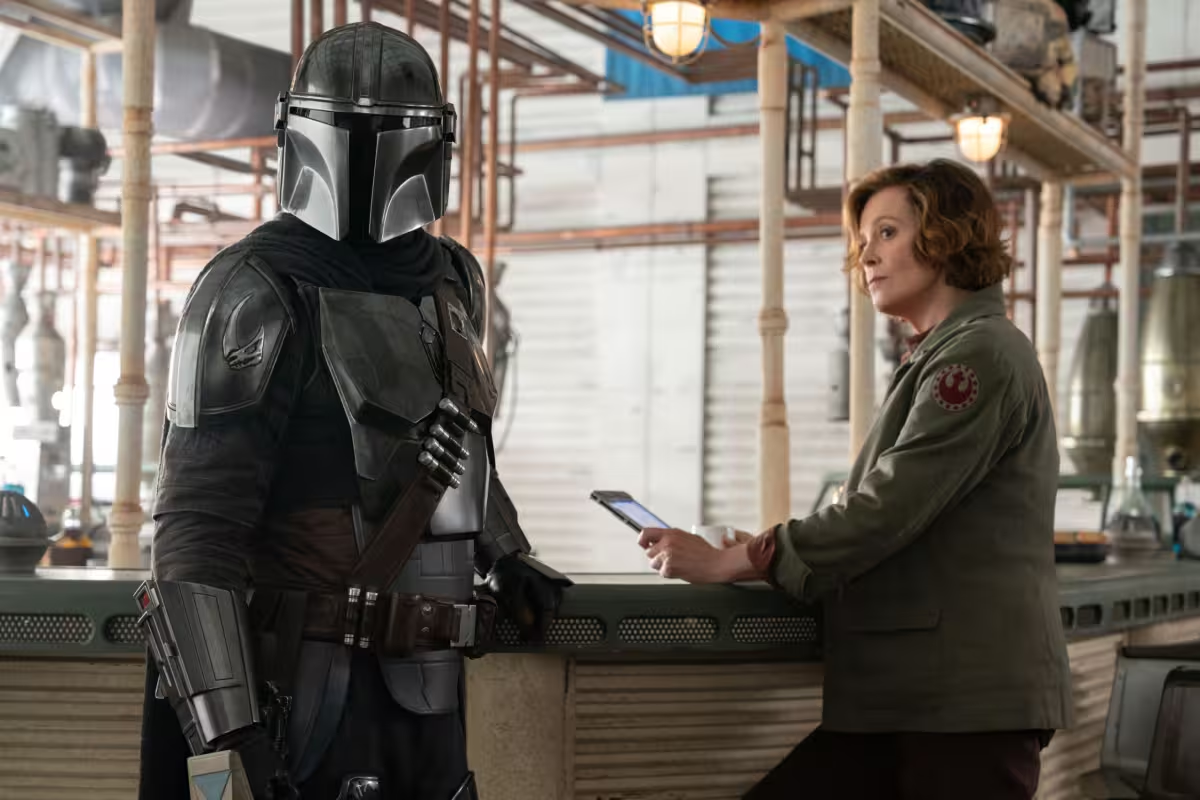
That imbalance has followed her career. In the early days of Star Wars, she was described as a powerful asset, yet much of the public memory of the franchise has centered on George Lucas rather than the editor who helped shape its voice and identity. She worked on the original trilogy alongside Paul Hirsch and Richard Chew, and George Lucas later cited her as responsible for the film’s “dying and crying” scenes in Return of the Jedi.
Her career reached well beyond the galaxy that made her famous. She was nominated for editing George Lucas’s American Graffiti four years before her Oscar win, edited his debut feature THX 1138, and worked with Martin Scorsese and Francis Ford Coppola. She was credited as sole editor on Alice Doesn’t Live Here Anymore and served as supervising editor on Taxi Driver and New York, New York, films that underscored how much of American cinema ran through the cutting room as much as the director’s chair.
Her death leaves one clear fact and one open question: the film history is settled, but the exact timing of her death was not disclosed. What is not in doubt is that Marcia Lucas changed the shape of one of the most influential movies ever made, and the recognition for that work is arriving only after her voice has gone silent.
