


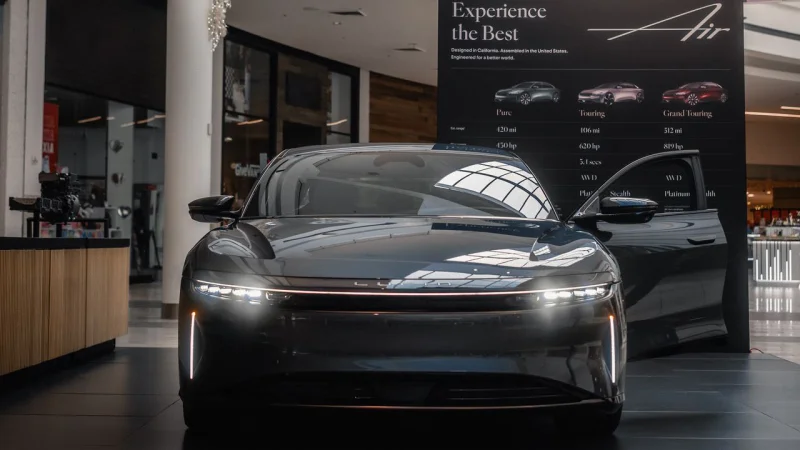
Lucid Motors is preparing an over-the-air software update for 2,039 Air electric sedans in the US after finding an inverter defect that can cut drive power without warning. The automaker filed the action with the National Highway Traffic Safety Administration on May 27, and the agency acknowledged it a day later.
The update targets 2024 and 2025 Air Pure Rear-Wheel Drive cars built with a Gen 4 inverter, the unit that converts the battery’s DC power into the AC current that runs the motor. Lucid says the fix should begin rolling out around the end of June, with the cars receiving new monitoring logic meant to catch an impending failure before power drops out.
The timing matters because drivers will not be waiting for a shop visit in the usual way. Lucid plans to push the patch over the air, and the software is designed to watch for early signs of trouble, set a diagnostic trouble code and trigger an in-car warning that reads, “Drive System Fault, Schedule Service Immediately.” The alert is supposed to stay on until LucidService clears it.
The company says the problem starts when vibration from the motor reaches the inverter and works on its internal components over time. That movement can wear the pads and contacts on the gate driver circuit board through fretting, interrupt internal signals and trigger a switching module failure. Once that happens, the inverter can no longer convert power, which is how the unwarned loss of drive power can occur.
Lucid says the flaw is not spread evenly through the recall population. Only about 1.6% of the recalled vehicles, or roughly 33 cars, are believed to actually carry the defect, even though every one of the 2,039 sedans is covered by the update. The issue is limited to the single-motor Air Pure, while dual-motor Air models such as Touring and Grand Touring are excluded because a second motor can keep the car moving if one unit fails.
That narrow scope also fits Lucid’s own failure history. The company says every failure tied to this issue happened on a Gen 4 unit, and no other inverter generation showed the fault. Lucid says drivers should get the warning at least 100 miles before any actual loss of power, giving owners time to respond before the defect becomes a roadside problem.
The unanswered question is how many owners will actually see the alert and need follow-up service once the update lands. Lucid has set the fix in motion and given a date window for delivery; what remains open is how many of the roughly 33 affected vehicles will surface in real use before the software closes the gap. Lucid’s move also lands as the company continues to build out a broader public profile, including its robotaxi effort with Uber and Nuro.
