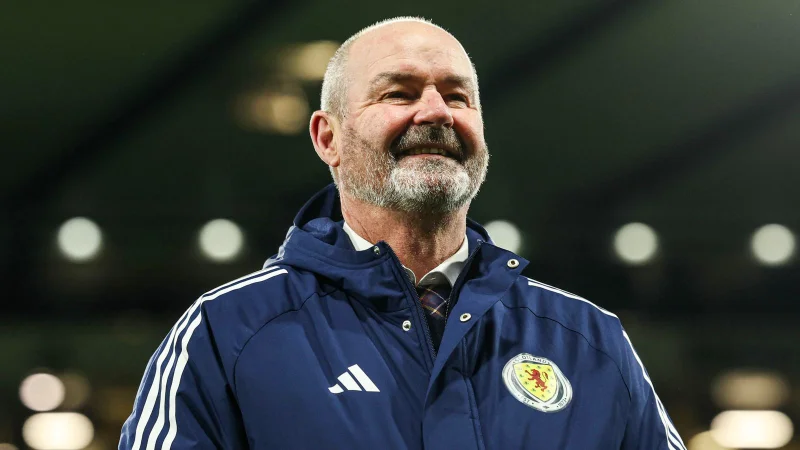
Steve Clarke has signed a new Scotland contract that will keep him in charge until 2030, committing the 62-year-old to a role he once thought would be ending soon. The deal gives Scotland a fixed hand on the wheel through the next World Cup cycle and beyond.
That is why this matters now for scotland fc: the new agreement was announced this week before Saturday’s friendly with Curacao at Hampden and ahead of the summer finals in the United States, Canada and Mexico. Clarke said the extension brings clarity for the squad and for Scottish football, while also backing up his belief that he is still the best man for the job.
It is a sharp change from the mood after Euro 2024, when Scotland lost to Germany and Hungary and drew with Switzerland. Clarke said there was a clamour for him to go after that tournament, even though he has now moved from uncertainty to an agreement that could leave him in post for 11 years by 2030.
The turnaround is rooted in what Clarke sees inside the squad. He said he knew he had players who could qualify for a World Cup, and that the new deal gives everybody clarity moving forward. He also pointed to the way the group has been built over time, with about nine or 10 changes between the first Euros and the second Euros, and another nine or 10 changes between the second Euros and this World Cup squad. For Clarke, it is evolution rather than revolution.
That slower approach has been central to his thinking. He said he has been looking at younger players for the future, and that he understands better what comes next than someone arriving fresh. After the last Euros, he was around 75% sure this would probably be his last campaign; after Scotland secured a place in this summer’s finals, he put his chances of staying on at 50-50. The final call, he said, came down to a conviction that the players enjoy being together and working with him and his staff.
There is still one question hanging over the agreement: whether any performance targets or exit points sit inside the deal. Clarke did not spell out any, but he made clear he expects stability to continue as Scotland moves toward another major cycle. If the next few years follow the pattern he described, he will be in the same job long after the doubts that followed Euro 2024 have faded.