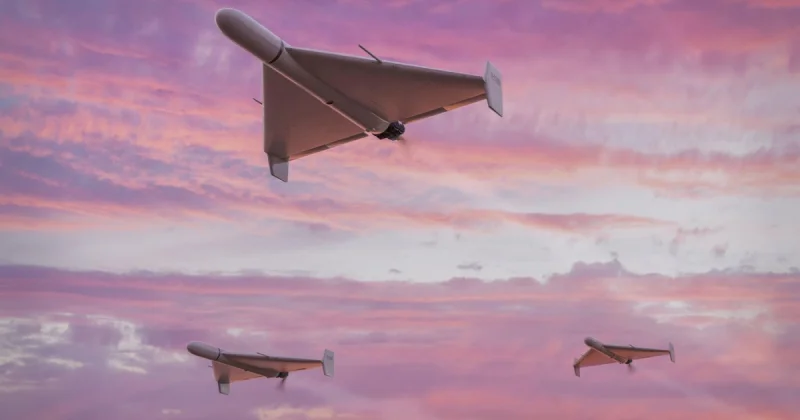
A drone involved in attacks on infrastructure in Ukraine fell on the roof of a home in Galati in the night from Thursday to Friday, setting off a fire, slightly injuring two people and forcing the evacuation of the building. The incident quickly pushed Romania’s security debate back into the open, with Foreign Minister Oana Țoiu saying the country needs stronger NATO anti-drone response capability on the eastern flank. For readers following the earlier report, see Roumanie: un drone russe frappe un immeuble à Galați, deux blessés légers.
Țoiu said the president was informed after the overnight incident, and NATO was informed as well. She said allied partners have been discussing how to strengthen the eastern flank over the last few months, and that the Ministry of National Defence has already placed several air-defense elements on its priority acquisition list. The problem, she said, is that new capabilities are still moving through procurement and have not yet been delivered.
That gap is what gives the Galați episode its weight. Romania is not talking about a theoretical threat or a distant battlefield; it is dealing with a drone that crossed into a civilian area, landed on a house and left two people with minor injuries. In Țoiu’s view, that is exactly the sort of case that belongs in NATO’s most serious consultation track, because it shows how quickly the war in Ukraine can spill over onto allied territory.
Țoiu put Article 4 at the center of that argument. She said Article 4 is a tool Romania can use, explaining that it means consultations between allied states when one of them believes there is a risk to its security. She also said the incident from the previous night fits the category of events that justify using such instruments. In her words, the Romanian president currently has both the command and the power to invoke Article 4 and any diplomatic measures, and she stressed that there is no constraint on Romania’s ability to respond.
The broader context is clear enough. Over the past few months, the Foreign Ministry and the Defence Ministry have been pressing, both inside NATO and with partners, for a stronger eastern flank. The Galati crash gives that argument a sharper edge, because it shows how much Romania is still relying on allied common capabilities while it waits for the new systems it has ordered. The message from Bucharest is not that the threat is new. It is that the window between identifying it and fully equipping the border remains open.
What happens next is a political and military test. Romania can choose to press for Article 4 consultations, and Țoiu made clear that the legal and institutional path exists. The deeper question is whether this incident in Galati turns into the kind of allied response that changes air-defense readiness on the eastern flank before another drone crosses the border.