


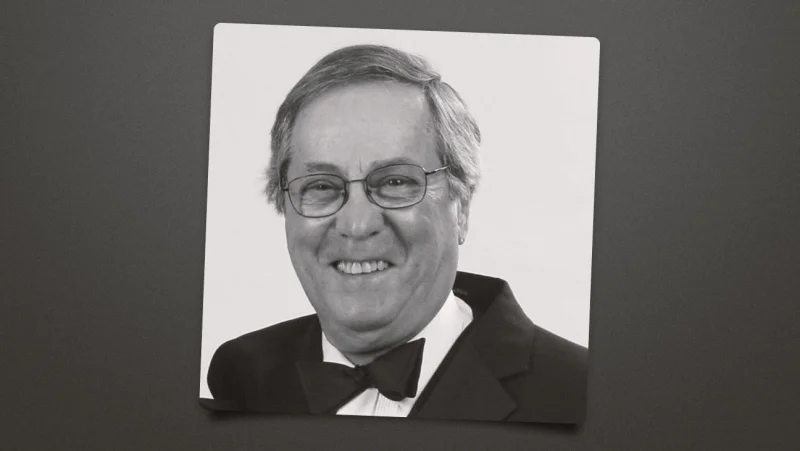
Howard Storm, the director who helped shape some of television’s most familiar sitcoms, died Tuesday at 94 of natural causes at his home in Beverly Hills. He had built a career that took him from stand-up comedy and the Desilu Workshop to the sets of Rhoda, Laverne & Shirley, Mork & Mindy and Valerie.
Storm made his official directing debut on a 1975 episode of Rhoda and went on to direct five other installments in the show’s second season. He also directed eight episodes of Doc in 1975-76 and eight episodes of Laverne & Shirley from 1976 to 1978, then became one of the most prolific directors on Mork & Mindy, guiding 59 episodes between 1978 and 1991, including the one-hour pilot. He later directed three episodes of Angie in 1979, including its pilot, and the feature Once Bitten in 1985.
Born Howard Sobel on Dec. 11, 1931, on the kitchen floor of an apartment on the Lower East Side, Storm grew up in a show-business family and said he knew early where he wanted to end up. “I knew from the age of two that I wanted to be in show business,” he said, adding, “My other friends wanted to be policemen, firemen, gangsters, and they all succeeded.” Before turning fully to directing, he signed a contract with the Desilu Workshop in 1959, part of Lucille Ball’s training ground for performers and writers.
That early comic training also carried him onto film sets with Woody Allen, where Storm worked on Bananas in 1971 and Everything You Always Wanted to Know About Sex but Were Afraid to Ask in 1972. He later recalled that he was effectively steering Allen himself during those shoots. “So I was unofficially directing him,” he said. The line fits the arc of his career: Storm kept moving from performer to director, often shaping the rhythm of a project from behind the camera rather than in front of it.
His path also reflected a hard-earned place inside the Garry Marshall circle, where he became a steady presence on the kind of fast, joke-heavy television that defined an era. That is part of why his death lands with such weight today. The credits alone tell one story, but the fuller one is that Storm was there when American sitcoms were becoming a factory line of hit-making style, and he was one of the hands keeping it moving. For readers who know the old network comedies, the work lives on in reruns; for the industry, it is another reminder that the directors who kept those shows running are disappearing one by one.
The unresolved question is not whether Storm mattered. He did. It is how many viewers remember the craft behind those familiar laughs, and whether the people who built that era will be remembered as clearly as the stars they helped frame. The answer, for now, lies in the credits and in the shows that still hold together because he once knew how to make a scene land.
