


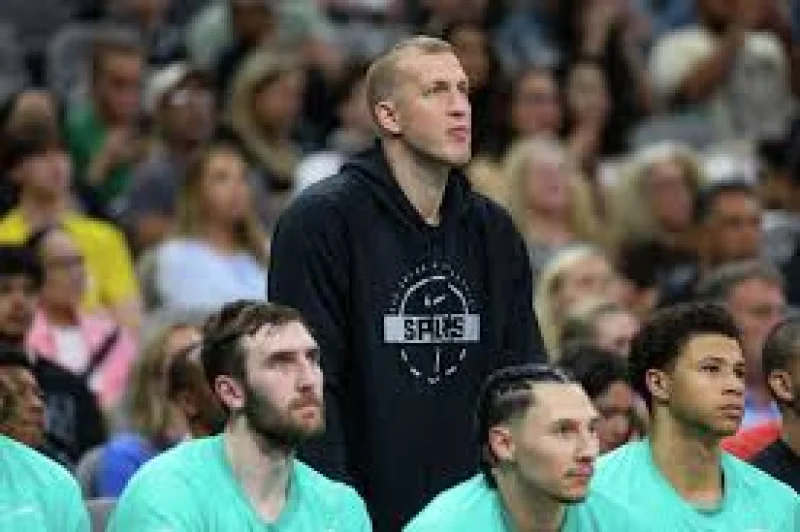
The Thunder-Spurs series is suddenly a lot more interesting after two hard fouls on Jared McCain in Game 5 Tuesday night raised the possibility of payback. Mason Plumlee caught McCain with an elbow in the back shortly after entering the game, and Bismack Biyombo later hit him in the face on a drive.
McCain did not hide how the second play felt. He said he asked Biyombo, “why’d you do that man,” and said the big man answered, “I got another one for you too.” That exchange has turned a physical playoff game into a question of what comes next, because if the fouls were not just isolated actions, the Thunder almost have to respond.
The reaction has centered on a belief that Victor Wembanyama may have told his more powerful teammates to handle McCain more forcefully. That idea has not been proven, but it is what has made the aftermath more combustible than the fouls themselves. In a series already defined by rising contact, the sense that one team may have been targeted changes how every possession gets viewed.
The Thunder’s problem is that they do not have many obvious options if they decide to answer physically. Isaiah Hartenstein is the logical player to do it, and Oklahoma City is lacking a powerful big man without the injured Thomas Sorber. In the modern NBA, though, true enforcers are mostly a thing of the past, which makes the threat of retaliation more likely than the old-fashioned certainty of it. That is part of what gives this series its edge: there is no neat way to restore balance, only the possibility that someone decides to try.
History offers a blunt reminder of how these things used to be settled. In the 1987 Eastern Conference Finals, Robert Parish took out Bill Laimbeer after Laimbeer had handed out cheap shots to Parish and Larry Bird. That kind of answer was once understood as part of the sport. Now it is more complicated, more watched, and more likely to turn into a bigger problem for the team that throws the first response.
For Oklahoma City, the issue goes beyond pride. The team is keen on trading up to get Cameron Boozer, and Washington might be a willing trade partner. But that is a future roster question. Right now, the more urgent reality is whether the Thunder decide that McCain’s treatment in Game 5 demands a physical answer and, if so, whether they have enough muscle on the floor to deliver one.
If the interpretation around Wembanyama’s message is right, the series may have crossed from playoff contact into something closer to a test of nerve. And with Oklahoma City thin in the middle, the next collision may say more about the Thunder’s limits than about the foul that started it.
