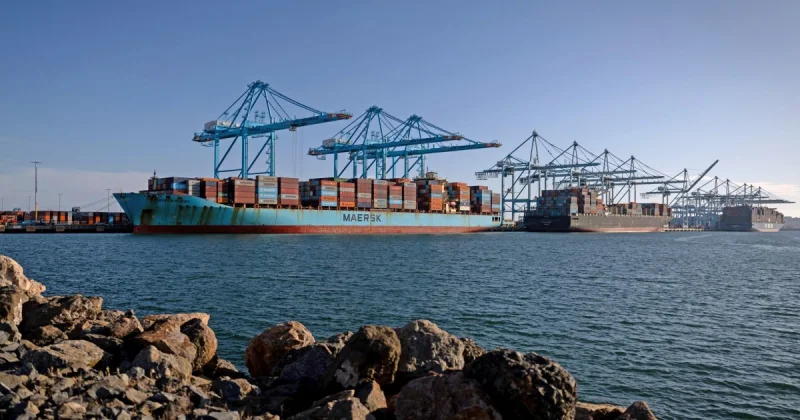
The Trump administration has refunded more than $20 billion in tariff payments to importers and shippers after the Supreme Court struck down the cornerstone of President Donald Trump’s trade policy in February. The money is moving back out even as the administration tests how far it can keep collecting a separate duty that remains in place.
By Friday, $20.6 billion in refunds had been completed, and 4,185 consolidated refunds had not yet been sent to Treasury because importers had not given bank account information, according to a court filing. Approximately $85 billion in both potential and certified refunds have been accepted for processing, Brandon Lord said Tuesday, a sign of how broad the claims have become and how many companies are still waiting to be made whole.
The scale is large because the tariffs at issue were large. Since the start of Trump’s second term, the administration had relied on the International Emergency Economic Powers Act to collect more than $165 billion in country-specific tariffs from importers. In February, the Supreme Court found those tariffs exceeded what IEEPA allowed the president to do, unraveling the legal basis for one of the administration’s biggest trade tools.
Hundreds of companies have lined up to get their money back. Among them are Costco, Walmart, Home Depot, Target, General Motors, Ford, FedEx, UPS and DHL. Trump said last month that he would remember which companies decided not to ask for refunds, a warning that has hung over the process as businesses weigh how aggressively to pursue repayment.
The refunds, though, do not mean the tariff fight is over. Importers are still paying a blanket 10% tariff Trump imposed under Section 122 of the Trade Act of 1974 after the court ruling. That law lets a president impose global tariffs of up to 15% for as long as 150 days, and Trump threatened to push the duty to 15% in the days after the ruling, though he has not done so.
The administration now appears poised to try to restart the 150-day clock without asking Congress, a move that could produce the next legal test for the White House’s trade strategy. U.S. Trade Representative Jamieson Greer said Tuesday at the Council on Foreign Relations that he cannot imagine the Republican-controlled House and Senate moving to block the administration from renewing the period.
Greer was more direct about the legal opening he thinks the administration has. “When you look at that statute, it says they expire but doesn’t say when you can redo it,” he said, adding, “I might get in a little trouble here.” He also said, “Whether the 122, you know, can be used — when it can be reused — I mean, I can’t imagine that Congress would say, well, this is just, you know, once per term, right?”
He then drew the line that still leaves the issue unsettled. “So I can’t really opine on it, beyond saying it doesn’t say you can’t reuse it. But it is temporary; there’s some tension in that,” Greer said. That tension is now the heart of the administration’s trade playbook: one set of tariffs has been knocked down, billions are being returned, and another tariff is being kept alive while officials look for a way to extend it.
The next question is not whether the refund queue is moving; it is whether the White House can keep its 10% tariff in place long enough to build a new legal defense around it.