


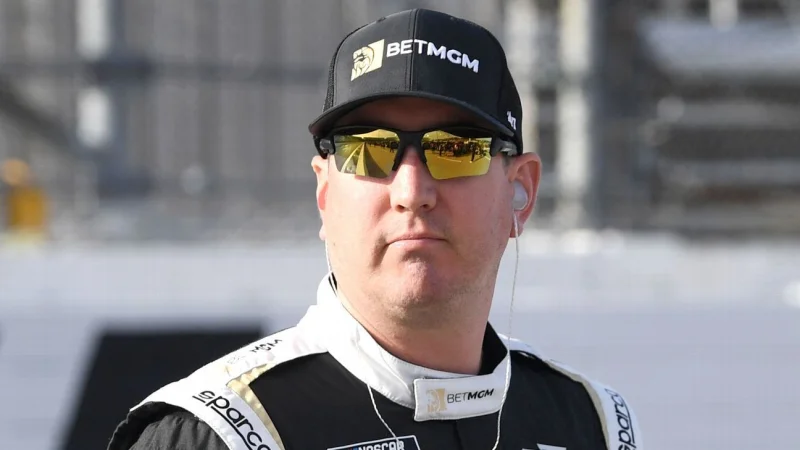
Kyle Busch died last week at 41 after complications from bacterial pneumonia led to sepsis, with his death listed as natural, according to the family and the autopsy findings. He was cremated in Mooresville, North Carolina, after the examination.
The news answered the question that had shadowed Busch’s final days after he was forced out of the Coca-Cola 600 at Charlotte Motor Speedway because of a severe illness. His family said he had been battling severe pneumonia that turned into sepsis, bringing rapid and overwhelming complications.
Busch had been feeling sick for days to weeks before sepsis set in. On May 10, while racing at Watkins Glen, he was thought to have had a sinus cold and radioed his team to say he needed a shot from a doctor after the race. Even so, he kept competing and making appearances, winning the Truck Series race at Dover, finishing 17th in the All-Star race and attending the opening of a go-kart track with his 11-year-old son, Brexton, last week.
That made the turn in his condition all the more abrupt. On May 20, Busch was testing in the Chevrolet racing simulator in Concord when he became unresponsive and was taken to a hospital in Charlotte. An emergency 911 caller described a person with shortness of breath who was very hot, thought he was going to pass out and was coughing up blood. The caller also said the man was awake and lying on the bathroom floor inside the complex.
Busch died at the hospital the following day. The diagnosis and timeline show how quickly sepsis can escalate: a life-threatening emergency triggered by the body’s extreme response to infection, in this case a bacterial pneumonia that had not fully broken through until it was too late. The fact that he was still racing and appearing in public while sick only underscores how little time the illness left him once it took hold.
Busch was one of NASCAR’s defining drivers, a two-time Cup Series champion who won a record 234 races across the sport’s top three national series. Most of that success came with Joe Gibbs Racing before he moved on to Richard Childress Racing, and NASCAR CEO Steve O’Donnell called him a certain first-ballot Hall of Famer. The sport lost not just a champion, but a driver whose final month still showed up on track, even as his health was slipping away.
