


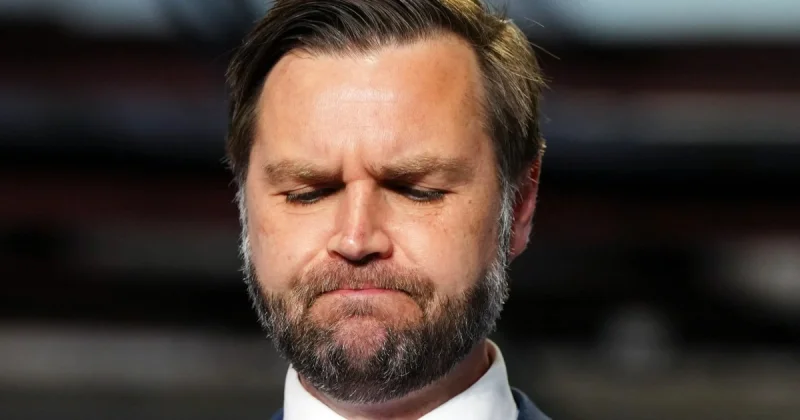
Three Democratic state attorneys general said Tuesday that their deputies were turned away from a White House roundtable hosted by JD Vance, even as the administration pressed its task force to eliminate fraud as a bipartisan campaign against waste in government programs.
New York Attorney General Letitia James said her deputy attorney general traveled to Washington on Tuesday and was denied access to the meeting. Vance had gathered more than a dozen Republican state attorneys general for the event, which was part of the White House campaign to root out fraud in government programs. The vice president said representatives from the Democratic attorneys general offices in Oregon and Connecticut were present, and argued that fraud should not be treated as a partisan issue. “This should not be a partisan effort – everybody should care about fraud,” he said.
The clash landed on a day when 24 state attorneys general formally told Vance in a letter that they would not attend the roundtable. The Democrats said they had been invited with less than one business day’s notice and given no agenda, making it impossible, they said, to take part in any serious discussion. Vance said the task force, launched in March, had already exposed billions of dollars in benefits stolen from the American people.
James said her office has been a leader in prosecuting Medicaid fraud and was cited with three other Medicaid fraud offices as accounting for half of all civil recoveries in the United States in fiscal year 2025. She said real collaboration between states and the federal government requires proper notice, sincere engagement and a genuine chance for productive discussion. That argument went to the heart of the dispute: the White House has framed the effort as bipartisan, but Democratic attorneys general said the invitation process suggested something narrower.
California Attorney General Rob Bonta and New Jersey Attorney General Jennifer Davenport also declined a last-minute invitation to attend alongside their Republican counterparts. Davenport said eliminating fraud cannot be a partisan effort or politically motivated, but she said she feared the administration was using fraud allegations to freeze or cut funding for critical programs. She also said the Trump administration had gutted many of the federal agencies meant to root out fraud, even as it moved to make fraud enforcement a centerpiece of its agenda.
Wisconsin Attorney General Josh Kaul criticized that approach more sharply. He said the administration could not show a serious commitment to fraud while, in his words, embracing people who commit fraud and removing inspectors general who investigate it. The dispute leaves the White House task force to eliminate fraud with a familiar problem in Washington: it wants the politics of a bipartisan crackdown, but it is still arguing with the people it says it wants at the table.
