


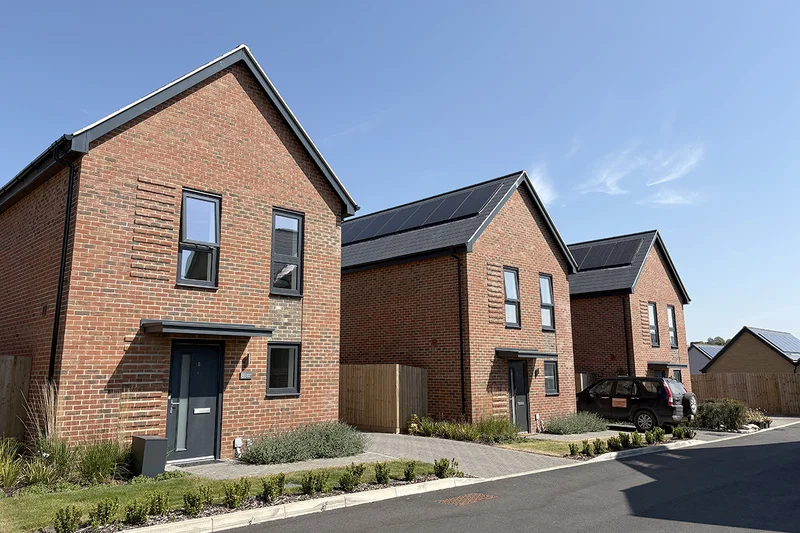
When Sophie Wates moved into a new-build one-bedroom house in Essex in autumn 2024, she had one immediate calculation to make: energy or everything else. She had been paying around £250 a month on bills before moving into a home fitted for Octopus Energy’s Zero Bills tariff. Now she pays £0 a month for energy.
Wates is living in one of 89 homes built by Hill Group in partnership with Octopus, a project with a contract value of around £32 million. The development includes 25 affordable homes bought by Clarion under a Section 106 deal, with 16 for social rent and nine for shared ownership, while the other 64 homes were sold on the open market for about £480,000 to just under £1 million. All 89 homes are eligible for the tariff, and residents can opt out at any time and switch to another supplier.
The scheme matters because it puts a real-world test case behind a promise that has sounded almost too neat to be true. Octopus says its Zero Bills homes are fitted with solar panels, a heat pump, a domestic battery and a smart meter, and that the combination generates enough energy that residents do not need to pay energy bills for at least five years, guaranteed. The company wants 100,000 zero-bills homes by 2030 across the UK, Germany, France and New Zealand.
For Wates, the change has been more than a line on a bill. She said the monthly cost of gas and electricity had once forced her to think in brutal trade-offs, describing a choice between energy and food. She also said her family had quickly taken to the house and garden, with the outdoor space becoming, in her words, a dog garden. And for her, the broader point is clear: she said homes should be moving away from oil and gas because that model is not sustainable.
That view lands at a time when decarbonising homes is becoming a national priority, with government support including the £5 billion Warm Homes Fund and a Future Homes Standard that confirmed all new homes will require a heat pump and most must include renewable technology. Zero Bills is designed as a smart tariff for homes already fitted with renewable and storage technology, which makes the Essex development a glimpse of what future housing could look like once the policy catches up with the technology.
The friction point is that this is still a selectively designed system, not a universal fix. The homes are new-build, the technology is built in from the start and the extra costs were shared between Clarion, Octopus and Hill. That makes the model easier to price in than the stock of older homes that still make up most of Britain’s housing. But the direction of travel is hard to miss: earlier this year, nearly 100 social landlords were already in talks with Octopus about a zero-bills tariff for affordable housing providers. If those talks turn into deals, the Essex pilot could become a template rather than a novelty.
For now, the answer to the question behind the slogan is simple. In at least one Essex home, the Octopus Energy Social Housing Tariff is not just cutting bills — it has removed them entirely.
