


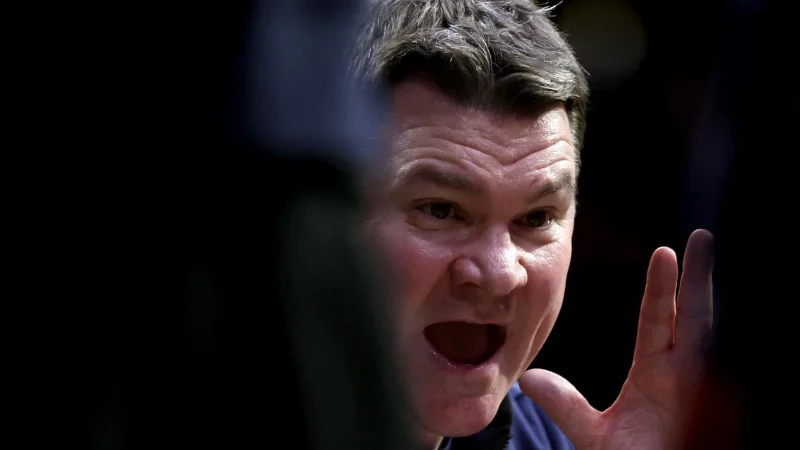
Tommy Lloyd spent Wednesday in Texas at the Big 12’s annual spring meetings, but part of his attention was back in Tucson and on Koa Peat. As Peat’s NBA Draft withdrawal deadline approached Wednesday night, the Arizona coach said it remained unclear whether the freshman would return for his sophomore season.
Lloyd said during a 35-minute news conference that he and the program had been in frequent contact with Peat and his family while also keeping recruiting options open in case the forward stays in the draft. Peat had been projected as a mid to lower first-round pick, which put him in the range where the choice can come down to how much certainty he wants against the value of another year in college. The coach said the timing was far from ideal. “The timing is never perfect,” he said, adding that the spring meetings were not scheduled with the withdrawal date in mind. “I don’t know, but when they pick the dates for this meeting, they’re probably not looking at the withdrawal date.”
That tension is the reality for high-major programs now. Players with eligibility left can sometimes make as much or more by staying in college than by signing an NBA deal tied to the first-round rookie salary scale, which makes the decision bigger than simply whether a player is ready for the league. Lloyd said there had already been “a lot of conversations with Koa and his family,” and he described the process as one that has to be handled with patience. “You’re checking your phone a little more often than you would be otherwise,” he said.
For Arizona, the stakes are obvious. Peat was one of the faces of the Wildcats’ run to the end of the season, from Lloyd organizing the team during a timeout in a Feb. 18 game against BYU to Peat’s dunk in the Elite Eight win over Purdue on March 28 and the hug he gave his coach after the Final Four loss to Michigan on April 4. Those moments made Peat central to the program’s present, but his decision also affects its next roster move if he chooses to leave.
Lloyd said he has tried to make one point clear: the call belongs to the player. “Obviously, it’s the player’s race to run, and you have to respect that,” he said. “I mean, these aren’t easy decisions. I think a lot of things in life you get second chances at. You could pick a school, and you can transfer, you can get married, get divorced, and get married again. This decision you get one time to really cash in your chips, so to speak. So it’s a big decision.”
He also acknowledged the awkward place coaches are put in when they want a player to stay but still have to prepare for the opposite outcome. “College coaches, I think we always get looked at as selfish, if you’re trying to keep the players in the program,” Lloyd said. “Obviously you want good players and good kids in your program, so it can make it a delicate situation. There’s no doubt about that.”
The uncertainty around Peat landed at the same time Lloyd was dealing with another set of issues in Texas. He and West Virginia coach Ross Hodge discussed national topics during the meetings, including a proposed five-year eligibility window and whether the sport should go back to 20 conference games. Those questions are still unsettled, and the outcome matters to coaches building rosters in a system that keeps changing underneath them.
For Arizona, though, the immediate question is narrower and more personal. Lloyd can keep recruiting while staying in touch with Peat, but until the forward decides whether to stay in the draft or return, the Wildcats are living with both versions of next season at once.
