


Nvidia just posted another quarter that gave skeptics little room to breathe. The company said fiscal first-quarter 2027 revenue reached a record $81.6 billion, up 85% from a year earlier, as demand for its AI chips kept surging.
The numbers came with the kind of momentum that has turned Nvidia into one of the best-performing stocks ever. Over the last three years, the stock has climbed 600%, far ahead of the S&P 500’s 78% gain over the same stretch, and its market value now stands above $5 trillion.
The company’s fiscal Q1 2027 results, for the period ended April 26, 2026, also marked 14 consecutive quarters of revenue growth. Data center revenue rose 92% to $75.2 billion, showing that the business driving the AI boom remains the core of the story. Nvidia said its most recent profit margin was 74.9%, a level that helps explain why investors keep paying up for the shares even after such a long run.
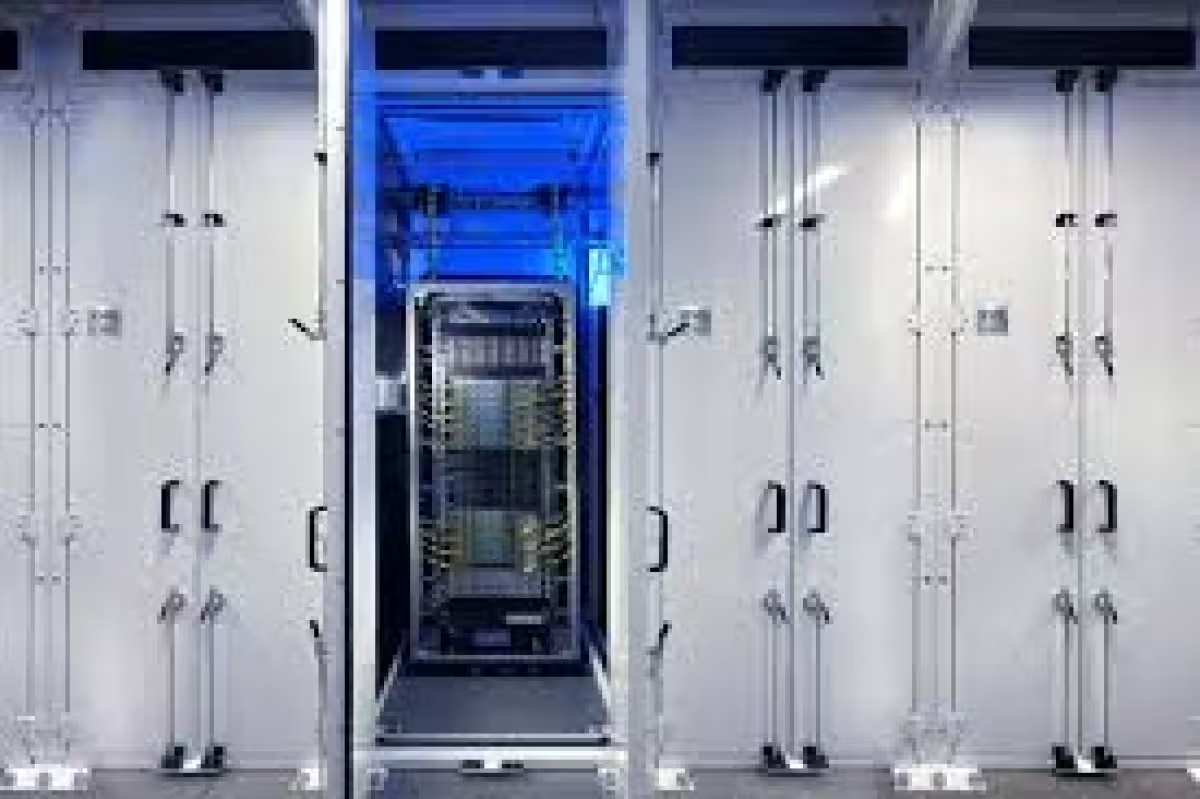
That is why the nvidia stock price 2026 forecast remains such a live debate. Nvidia trades at 25 times forward earnings, cheaper than some peers even after its rally, with Advanced Micro Devices at 61 times forward earnings and Broadcom at 37 times. Analysts are still leaning bullish: 52 of 54 covering the company rate it a buy, and the average price target is $299, about 35% above where the stock was trading at the time of writing.
There is precedent for that skepticism. In May 2023, Cathie Wood said Nvidia was “priced ahead of the curve,” and early in 2024 Morningstar analysts called the stock overvalued. Both calls landed while the shares kept marching higher. Nvidia has spent much of the last two years being treated as expensive and still delivering the kind of growth that makes that judgment look premature.
Context matters because Nvidia is no longer being valued only as a chip maker. Its data center business now makes up the bulk of earnings, and the stock is increasingly tied to the broader build-out of AI infrastructure. That is also why Jensen Huang’s projection at Nvidia’s 2026 GTC conference still hangs over the debate: he said Blackwell and Vera Rubin GPUs could generate at least $1 trillion in sales through 2027.
The tension is that the company’s latest guidance does not leave much doubt about demand, but it also asks investors to keep believing the pace can stay extraordinary. Nvidia expects about $91 billion in revenue in fiscal Q2 2027, another figure that would have sounded impossible not long ago. For now, the market is still betting that the AI spending cycle has farther to run, and Nvidia remains the clearest test of that belief.
